REVIEW · CABO SAN LUCAS
Small-Group Whale Watching Zodiac Boat Cruise in Cabo San Lucas
Book on Viator →Operated by Cabo Expeditions · Bookable on Viator
Whales show up fast here. This zodiac cruise from Cabo San Lucas mixes a quick El Arco photo stop with time out in the Sea of Cortez, where you can spot humpbacks, grays, sperm whales, dolphins, and sometimes even orcas. An onboard marine biologist helps you connect the animals to the geography around the Baja Peninsula.
I love the small-group feel (the operator lists a maximum of 13 travelers, and the zodiac setup is designed to stay tight), so you’re not stuck behind a crowd. I also like the chance to get marine biology storytelling while you’re scanning the water—not just after.
One thing to consider: the ride can be bumpy, because this is a fast zodiac. If you have back issues (or are pregnant), it’s not the best match, and rough water can make viewing tougher.
In This Review
- Key things that make this whale cruise worth your time
- Cabo’s whale hunt on a small zodiac: what you’re really signing up for
- El Arco stop: the quick Land’s End photo break before the serious scanning
- Setting out from Cabo: how the captain and biologist shape your sightings
- Sea of Cortez wildlife chances: what you might see, and how to spot it
- The ride: fun, fast, and a little work (especially in rough water)
- Meeting point and timing: where to go and what to expect when you arrive
- What’s included (and what costs extra): the value math
- Who should book this Cabo whale watching cruise
- Crew names you might run into: why it helps to know who runs the show
- Should you book this zodiac whale watch in Cabo?
- FAQ
- Is this whale watching cruise in English?
- Where does the tour start, and does it include hotel pickup?
- How long is the tour?
- What’s included in the price?
- Is there an extra fee besides the $85?
- What kinds of whales and dolphins might I see?
Key things that make this whale cruise worth your time
- Zodiac speed + tight group for better chances at moving with whale activity
- Onboard marine biologist who talks Sea of Cortez wildlife and local geology
- El Arco picture stop near Land’s End before you push farther out
- Photo-friendly whale viewing with time to watch for breaches and tail blows
- Realistic expectations: you’re chasing movement across the water, not waiting in one spot
- Pay attention to the $5 dock/protected area fee so there are no surprises
Cabo’s whale hunt on a small zodiac: what you’re really signing up for
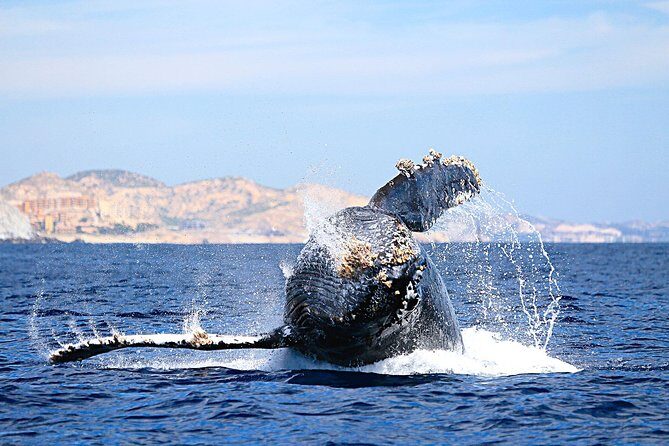
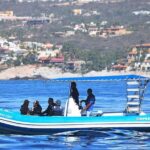
This is the kind of whale watching tour that feels more like a controlled expedition than a sightseeing cruise. You’re on a small, speedy zodiac-style boat, which means the crew can cover territory and reposition when whale activity pops up. That matters in Cabo, because whales don’t hang around like they’re posing.
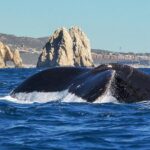
You’ll also spend time learning as you go. The tour includes a professional guide, and a marine biologist is on board to explain what you’re seeing—plus how Baja’s geology and the nearby seas shape the wildlife. The Sea of Cortez side is the star here, and it’s where you have seasonal chances at multiple whale types (including gray, sperm, and humpback, plus dolphins; orcas are also possible).
The price is $85 per person for about 2 hours 30 minutes on the water (approx.). In practical terms, what you’re paying for is movement—this boat is built to chase opportunity. If you want a whale cruise where you sit still and hope, this isn’t that style.
You can also read our reviews of more boat tours in Cabo San Lucas


El Arco stop: the quick Land’s End photo break before the serious scanning
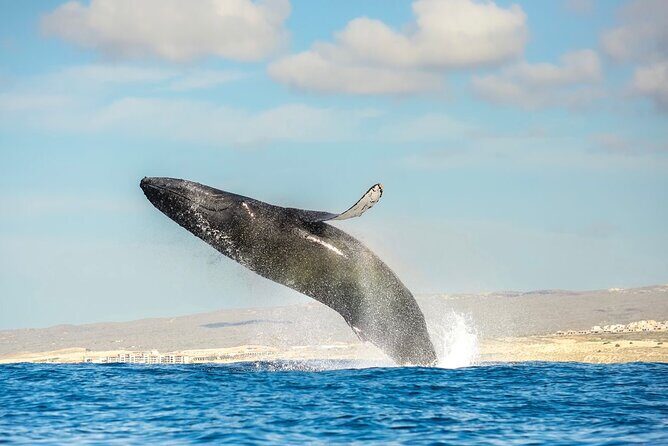
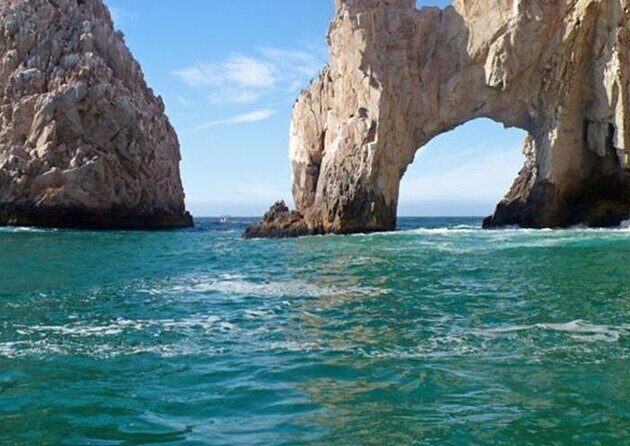
Your first stop is the Arch of Cabo San Lucas, locally called El Arco, also known as Land’s End. It’s a granite formation that rises dramatically where the Pacific Ocean meets the Sea of Cortez. The tour brings you close by boat so you can grab photos of the arch with the water around it.
The time here is short—about 10 minutes—so don’t treat it as a long land stop. Plan your camera settings before you arrive, and keep your valuables secure. The best photos happen when you’re ready at the moment the boat lines up.
Is it worth doing? Yes, because it gives you an immediate sense of place in Cabo before you head out to whale territory. Even if you’re there mostly for whales, this is a recognizable landmark that makes the day feel complete.
Setting out from Cabo: how the captain and biologist shape your sightings
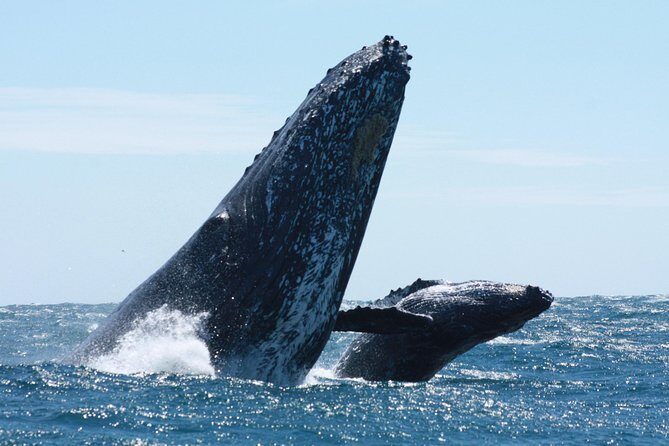
Once you board, the focus shifts fast: scan ahead, scan to the sides, then trust the captain’s route decisions. The Sea of Cortez hosts different whales depending on season, and the crew’s job is to find the water where sightings are most likely.
Here’s where the marine biologist helps. Instead of only telling you species names, the biologist explains the area—Baja geography, local conditions, and how the sea life uses these waters. That turns spotting from random looking into pattern recognition. You start to understand what you’re looking for: signs on the surface, movement patterns, and why the whales might be where they are.
The onboard narration is also what makes this tour feel more useful than a basic whale spotting session. If you’re the kind of traveler who likes to come home with something you learned—not just photos—you’ll appreciate this part.
A nice touch from actual operations: the captain’s whale-spotting routine tends to be structured. Crews like Captain Baltazar, Captain Jose, and others have a reputation for driving the boat thoughtfully around whale activity, and they aim to keep positioning respectful when whales are close.
Sea of Cortez wildlife chances: what you might see, and how to spot it
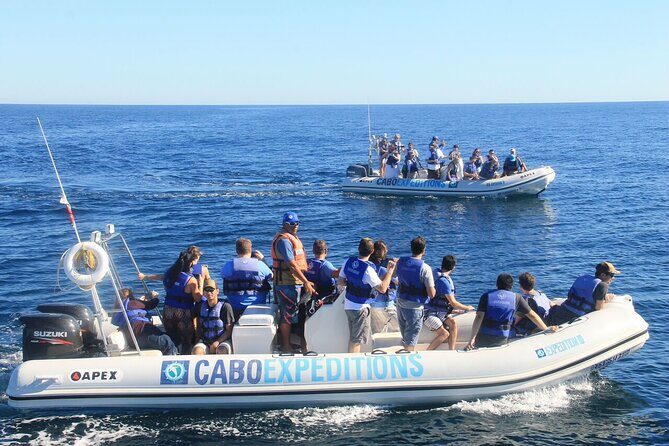
This tour advertises chances to see humpback whales, gray whales, sperm whales, orcas, and dolphins. It also mentions the possibility of additional whale species depending on season, so the exact mix changes over the months.
The big practical point: you’re not guaranteed any specific whale every time. What you get instead is the best odds that a zodiac tour can offer in this region—fast repositioning, plus a team trained to look for surfacing and activity.
What to watch for:
- Tail blows and flukes: quick, high signals that a whale is about to surface or just surfaced
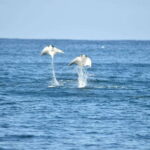
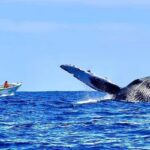
- Breaches: when a whale jumps out of the water, often the most dramatic moments for photos
- Short surface intervals: whales sometimes appear, then move on; the crew’s ability to keep up matters
- Dolphin movement: dolphins often show up as smaller, quicker surface activity around the larger animals
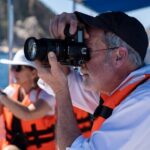
If you’re there for photos, bring a camera with enough battery and storage. It’s a zodiac ride—things happen quickly. Review-style tips that help: be ready for action without long delays, and keep your hat secure. With fast runs and open water, you don’t want to spend whale time wrestling your gear.
The ride: fun, fast, and a little work (especially in rough water)
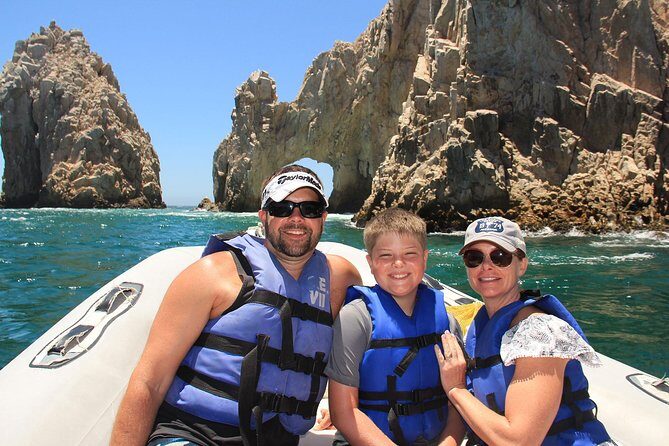
This zodiac cruise is exciting in a very physical way. One reason people choose it is that it feels close to the action. Another reason to choose carefully is that it can be rough.
Expect swells at times. When the ocean is choppy, the boat bounces, visibility can drop, and it becomes harder to hold a steady shot or comfortably watch for spouts. In the provided tour info, there’s also a clear note that the ride is not suited for everyone, including people with back problems or pregnant passengers.
What you can do:
- Wear layers. Wind off the water can surprise you.
- Hold onto your seat and anything that could fly.
- If you get motion sick easily, plan for it. This isn’t a slow, glassy-water cruise.
And one more reality check: even with the crew’s best efforts, rough conditions can reduce how easy it is to see whales clearly. If you’re visiting during a time when seas are often unsettled, keep that in mind when you plan the rest of your Cabo day.
You can also read our reviews of more whale watching tours in Cabo San Lucas
Meeting point and timing: where to go and what to expect when you arrive
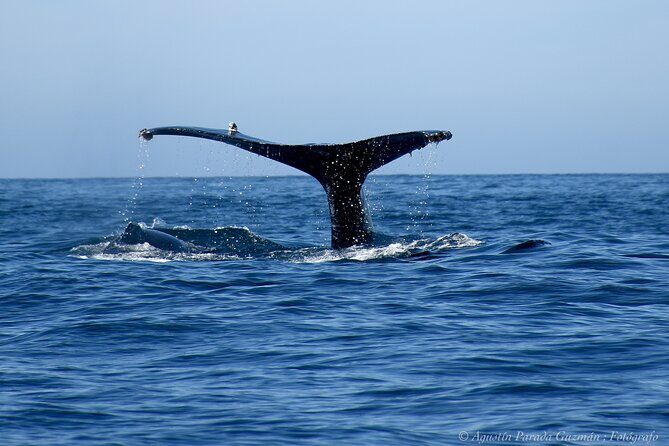
You’ll start at La Terminal de CaboMarina de Cabo San Lucas, Puerto 0, in front of the Breathless Hotel (El Medano area), in Cabo San Lucas. The tour ends back at the meeting point.
That detail matters. The tour information lists hotel pickup and drop-off as not included. So if your lodging is far from the marina or in an area outside their standard reach, you should plan to get yourself there. Some people report extra costs when pickup doesn’t match what they expected, so it’s smart to confirm what applies to your exact hotel.
A practical approach:
- Arrive early enough to find the boat and get settled.
- Bring a light layer, but also something secure for sun.
- If you’re not carrying a lot of stuff, you’ll enjoy the ride more.
Also note that confirmation is received at booking time, and the tour runs in English.
What’s included (and what costs extra): the value math
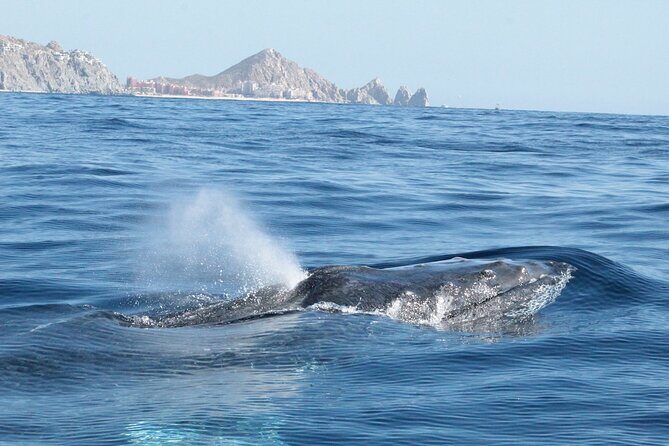
The tour includes:
- Bottled water
- Professional guide
Costs not included:
- Souvenir photos (sold separately)
- Hotel pickup/drop-off
- A $5 dock and protected areas fee per person
That $5 fee is small, but it’s worth planning for so you don’t feel hit at the dock. The bigger value question is how the tour’s total package matches what you want.
You’re paying for:
- Small-group structure (maximum listed at 13 travelers)
- A fast zodiac with the ability to reposition
- A marine biologist-style educational component
- Time specifically aimed at whale spotting
If your priority is big “sit-and-hope” views, you might prefer a different kind of cruise. If your priority is maximizing the odds of whale sightings with an informative crew and active boat movement, this one tends to make sense.
Who should book this Cabo whale watching cruise
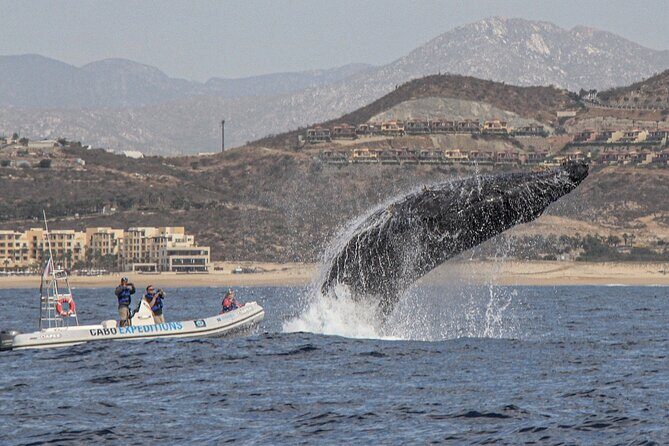
This cruise is a good match if:
- You want a hands-on wildlife experience where the boat moves with the action.
- You care about learning, not just photographing.
- You’re comfortable on a fast zodiac and can handle some chop if the water gets rough.
You may want to think twice if:
- You have back problems or you’re pregnant, since the ride is not set up for those situations.
- You need guaranteed smooth water. This is zodiac cruising—conditions can change quickly.
It also works well for a wide range of travelers. The tour notes that most travelers can participate, and children must be accompanied by an adult.
Crew names you might run into: why it helps to know who runs the show
Part of why people rate this tour highly is the mix of captain experience and guide-style explanation. In the information you provided, you can see names that have been part of great departures, including Katherine, Oscar, Rodrigo, and captains such as Baltazar, Jose, Romel, Jaime, Fernando, and Julio.
Even if you don’t know who you’ll get on your date, it’s reassuring that the operation has a pool of crews associated with respectful whale positioning and solid spotting skills.
A good rule for any whale tour: pay attention to how the crew behaves when whales surface. The best moments happen when the captain puts the boat in the right spot at the right time—without reckless speeding or crowding.
Should you book this zodiac whale watch in Cabo?
If you want a whale watching trip that feels active, informative, and built for real sightings, I’d book it. The combination of a small-group zodiac format, the marine biology narration, and the chance to scan the Sea of Cortez makes this a strong “Cabo must-do” for many travelers.
But book with the right expectations:
- You’re chasing movement across open water, not getting a guaranteed checklist of whales.
- The ride can be bumpy, and that affects comfort and viewing.
- Hotel pickup is not part of the included package, so plan to get to the marina.
My call: book this tour if whales are your main goal and you’re comfortable on a fast, open-water zodiac. Pass on it if smooth water comfort is a must and you can’t handle choppier conditions.
FAQ
Is this whale watching cruise in English?
Yes. The tour is offered in English, and that’s part of what the operator provides for the experience.
Where does the tour start, and does it include hotel pickup?
The meeting point is at La Terminal de CaboMarina de Cabo San Lucas (Puerto 0), in front of the Breathless Hotel in the El Medano area. Hotel pickup and drop-off are not included, and the activity ends back at the meeting point.
How long is the tour?
The duration is about 2 hours 30 minutes (approximately).
What’s included in the price?
You get bottled water and a professional guide. Souvenir photos are not included, and you may also need to budget for the dock and protected areas fee.
Is there an extra fee besides the $85?
Yes. There is a dock and protected areas fee of $5.00 per person that is not included in the base price.
What kinds of whales and dolphins might I see?
The tour highlights chances to see humpbacks, gray and sperm whales, orcas, and dolphins. Exact sightings depend on what’s happening in the Sea of Cortez during your dates.