REVIEW · CABO SAN LUCAS
Cabo: Whale-Whatching Boat Trip w/ All-Women Crew and Photos
Book on GetYourGuide →Operated by CABO NATURE · Bookable on GetYourGuide
Cabo’s whale songs reach your ears before you even plan what to film. This Cabo Nature trip is built for an intimate, respectful look at humpback whales with an onboard hydrophone and a marine biologist in the mix. On many departures, guides like Aurora and captains like Belem help you spot whales quickly and then explain what you’re seeing without turning it into a lecture.
I especially love two things: the small-group setup (max 12) and the way the crew handles photos so you can actually look out at the water instead of juggling a phone. I also like that the schedule works for a quick trip—two hours—while still including a photo stop at the Arch before heading out.
One drawback to consider: the sea spray is real, and this isn’t a good fit for everyone. If you’re pregnant, have back problems, or hate feeling cold/wet during small-boat rides, you may want a different day plan.
In This Review
- Key things I’d mark on your Cabo checklist
- A 2-hour whale hunt from La Terminal de Cabo
- The boat setup: small group, covered panga-style ride
- First stop: the Arch photo moment
- Where humpbacks show up: Pacific vs. Sea of Cortez
- Hydrophone whale song: what you actually listen for
- Photos included: how the crew captures the moment without hogging your time
- How the all-women team changes the vibe (and the care level)
- Whale watching value: why $91 can feel fair here
- What to pack: your comfort kit for Cabo whale weather
- Who this tour is best for (and who should skip it)
- Should you book Cabo Nature whale watching?
- FAQ
- How long is the whale-watching tour?
- Where is the meeting point in Cabo?
- How many people are on the boat?
- What kind of whales does the tour look for?
- Is the hydrophone included?
- Are photos included?
- What happens if we don’t see whales?
- What should I bring, and is it suitable for everyone?
Key things I’d mark on your Cabo checklist
- All-women crew with a marine biologist onboard, including guides such as Aurora, Nina, Maria, and Mariana on different dates
- Hydrophone included for whale underwater song when timing and conditions allow
- Small boat, max 12 guests for easier views and more personal attention
- Digital photos included so you can focus on watching, not photographing
- Whale-watching warranty: if you don’t see whales on the first tour, you get a second one free
A 2-hour whale hunt from La Terminal de Cabo
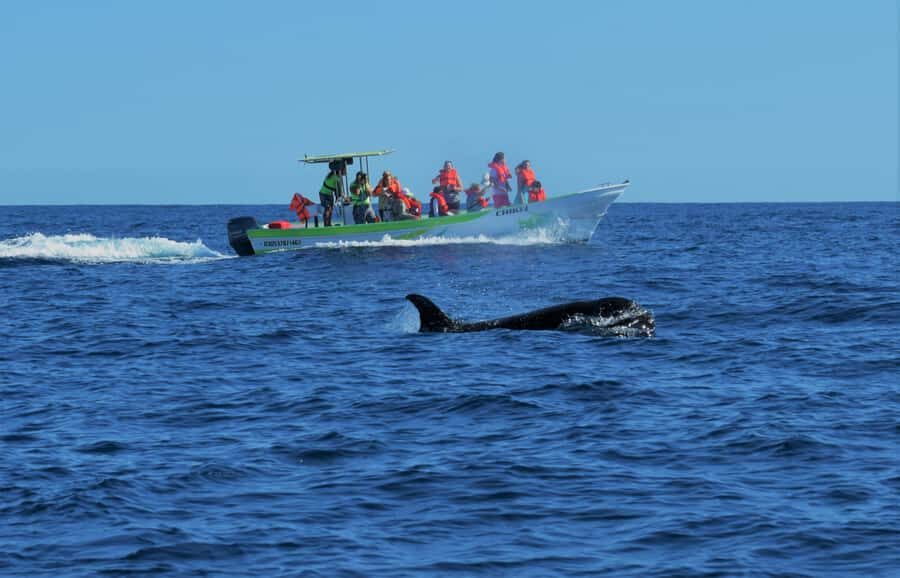
This tour is refreshingly straightforward: you meet at La Terminal de Cabo, right in front of Breathless Hotel, and the guide is typically wearing a green shirt with the Cabo Nature logo. From there, you’re on an 8-meter boat with a small group—small enough that you’re not craning your neck over strangers the whole time.
The timing matters because whale watching is partly patience and partly timing. This one usually runs in the morning and afternoon, and if you have the choice, mornings often feel calmer and produce better sightings. Even if you’re not a morning person, think of it as paying for smoother viewing conditions.
The price—$91 per person—feels more reasonable when you look at what’s included. You’re not just paying for time on the water. You get a marine biologist onboard, hydrophone listening, digital photos, and a whale-watching warranty.
You can also read our reviews of more boat tours in Cabo San Lucas



The boat setup: small group, covered panga-style ride
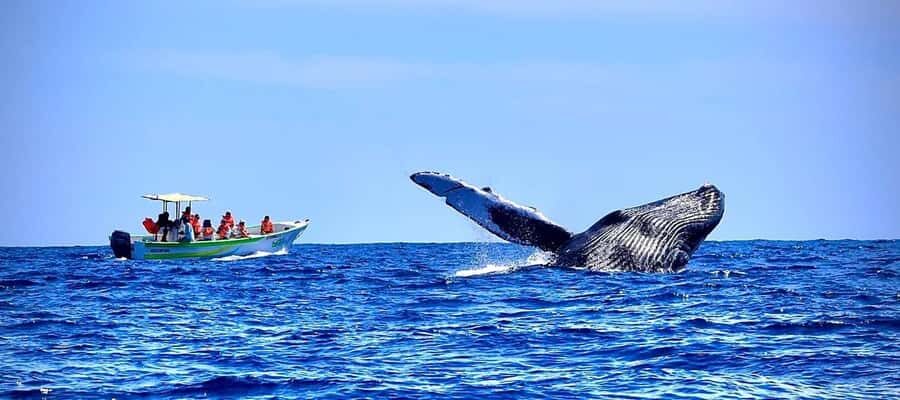
You’ll be traveling on a covered panga-style boat (the kind of setup that’s common for whale and dolphin watching in Cabo). The coverage isn’t just comfort for sun—it can also cut down on wind and spray when conditions get bumpy.
What you’re really paying for here is viewing quality. With fewer people, the crew can reposition you for better sight lines, and you’re less likely to end up watching from behind someone’s hat brim or phone glare. Multiple departures also highlight how the boat ride stays smoother than you might expect, which matters because 2 hours can feel long if you’re bouncing around.
Also, the company doesn’t treat this like a cattle call. The tone across guides and captains described in recent tours is safety-first and whale-first—positioning the boat respectfully rather than chasing action.
First stop: the Arch photo moment
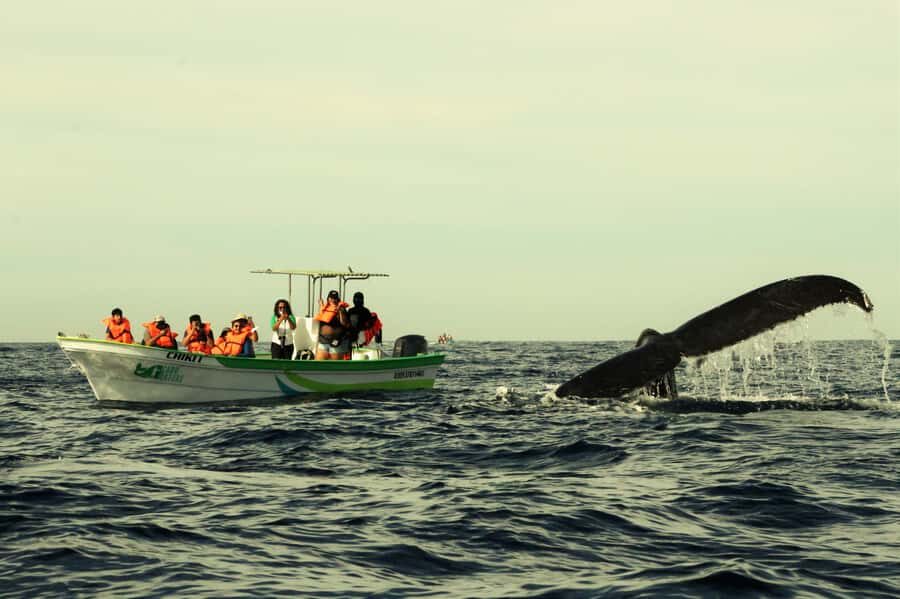
Before you hunt whales, you get a coastal run with a photo stop at the iconic Arch. It’s the kind of quick stop that helps you get your bearings fast: Cabo’s coastline, the dramatic rock formation, and a chance to grab a few photos before you head farther out.
This part is great if you’re the type who wants at least one win even on the day whale spotting is tricky. It also sets expectations: you’re going out from a classic Cabo viewpoint, then shifting into the marine focus once you’re in whale country.
Where humpbacks show up: Pacific vs. Sea of Cortez
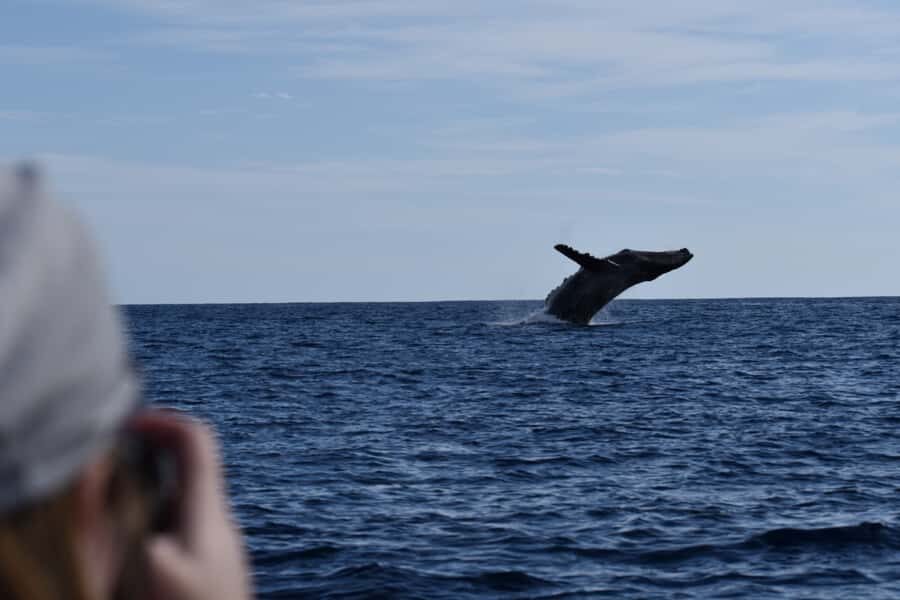
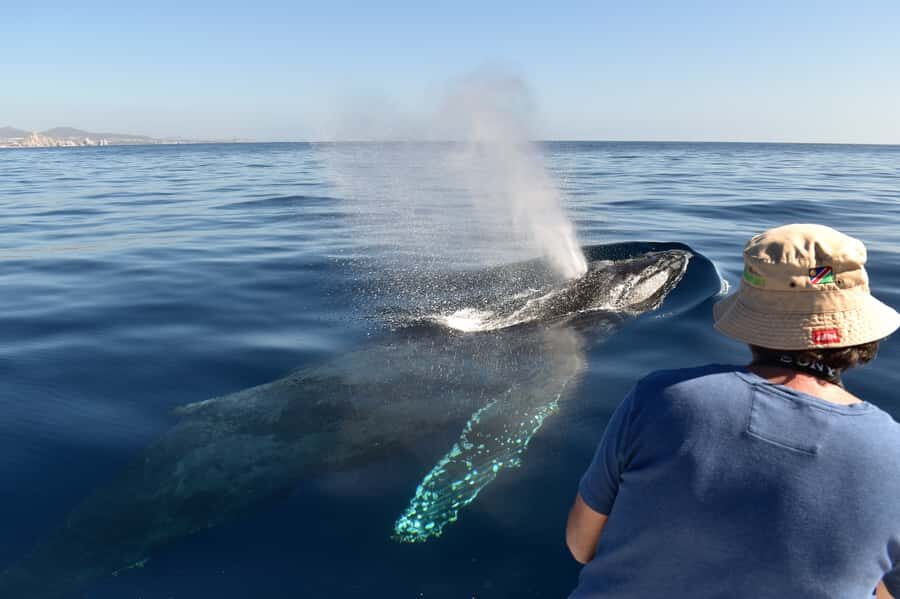
The tour targets humpback whales, and where you search depends on weather conditions: either the Pacific Ocean or the Sea of Cortez. That flexibility is smart. Whale watching isn’t just about luck; it’s about matching conditions to where whales are most likely to be, and where your captain can safely position you.
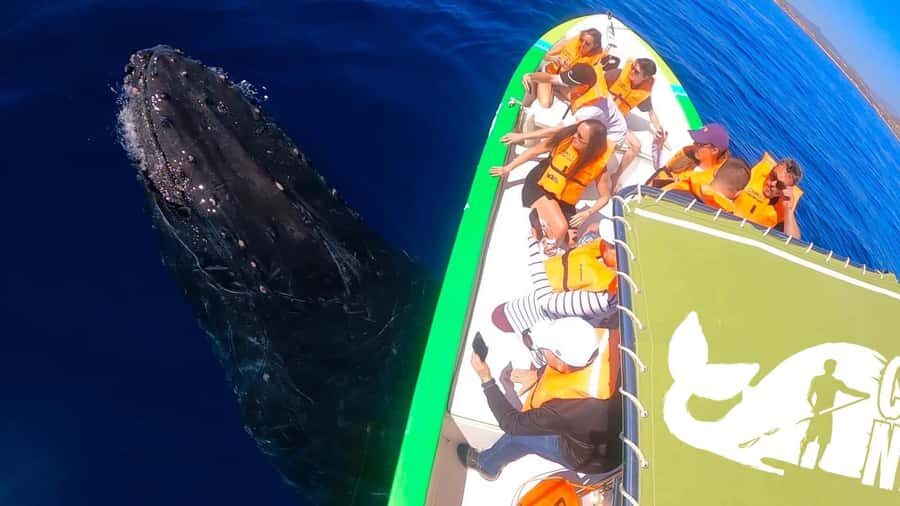
On some trips, you may also see gray whales alongside humpbacks. A number of outings describe getting views of mother/calf pairs, plus other surfacing behavior that’s easier to spot when the boat is small and positioned well.
Real talk: 100% certainty isn’t how whale watching works. But the structure here helps you feel less stranded:
- if whales aren’t found during the first tour, you’re offered a second tour free of charge
- the crew keeps searching in an area appropriate to the conditions rather than giving up quickly
Hydrophone whale song: what you actually listen for
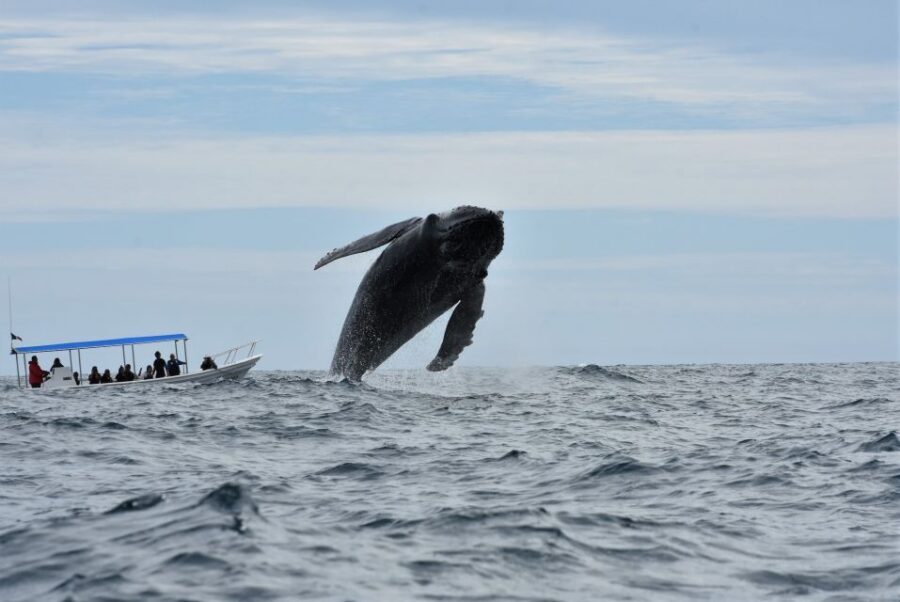
One of the standout inclusions is the hydrophone. If conditions and timing allow, the marine biologist will help you listen to the underwater calls—often described as the whales singing.
Here’s why that matters: you’re not just seeing whales break the surface. You’re getting a different layer of the experience. The hydrophone turns the ride from visual-only into something more intimate and a little eerie in the best way—like you’ve been granted access to the whale world’s soundtrack.
If you’re into marine biology, ask questions when the hydrophone is used. Guides such as Aurora, Nina, and Maria are described as bringing clear explanations about behavior and communication, and that context makes the listening moment more than a novelty.
You can also read our reviews of more whale watching tours in Cabo San Lucas

Photos included: how the crew captures the moment without hogging your time
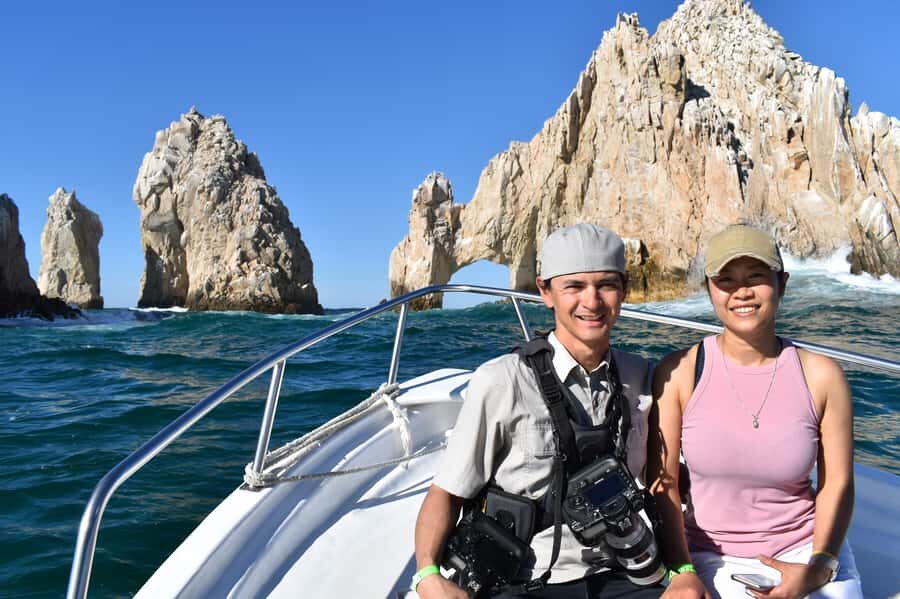
Yes, you get digital photos included. This is a big deal on a whale trip, because it’s hard to enjoy whales while constantly trying to manage the perfect shot.
What the operation seems to get right is workflow. The crew handles the photo-taking, while you spend your time scanning for spouts, following surfacing patterns, and reacting when a breach or close pass happens. Several recent departures also mention guides using longer-lens photography gear and then sending images by email tied to your booking.
One practical caution: keep expectations realistic. Photos are included digitally, but the experience still depends on conditions—light, distance, and how the boat is positioned. If downloads are a big concern for you, you might want to confirm the delivery method in your booking message.
How the all-women team changes the vibe (and the care level)
This tour’s credibility isn’t just the word women-led. It’s how the crew is described in action: professional, safety-focused, and genuinely tuned into whale behavior rather than trying to force encounters.
You’ll often travel with:
- a marine biologist onboard (names you may see include Aurora, Nina, Maria, Mariana, and other team members)
- a captain/pilot who positions the boat for good views while respecting whale boundaries (captains mentioned include Belem and Oscar)
Multiple accounts stress that the guides and captains avoid aggressive approaches and focus on staying at a respectful distance. That’s not only ethical. It also tends to create calmer interactions with the whales, which improves your odds of good sightings and clear observing time.
Whale watching value: why $91 can feel fair here
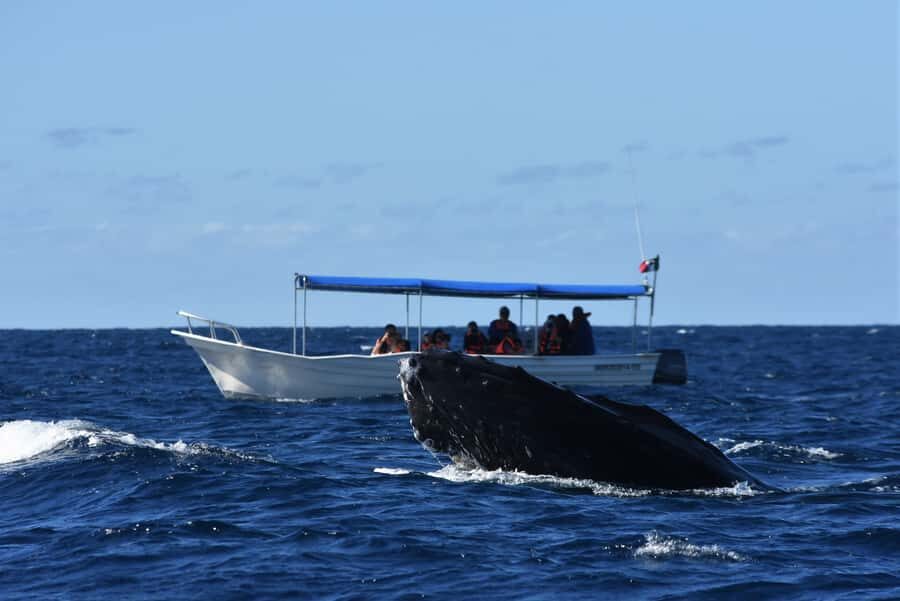
At $91 for a 2-hour excursion, this tour isn’t the cheapest option. It also isn’t trying to compete on price alone. It competes on extras and on confidence.
You’re getting:
- marine biologist narration onboard
- hydrophone whale song when possible
- digital photos included
- bottled water
- and the second-tour-free warranty if whales aren’t seen
For me, that combination is where the value lives. A “bare bones” whale watch might cost less, but it usually cuts the science, cuts the listening component, or cuts the photo support. If whale watching is a main event in your Cabo trip, paying a bit more for those built-in upgrades can save you money elsewhere—like buying an expensive photo add-on or paying for another tour later because the first didn’t deliver.
What to pack: your comfort kit for Cabo whale weather
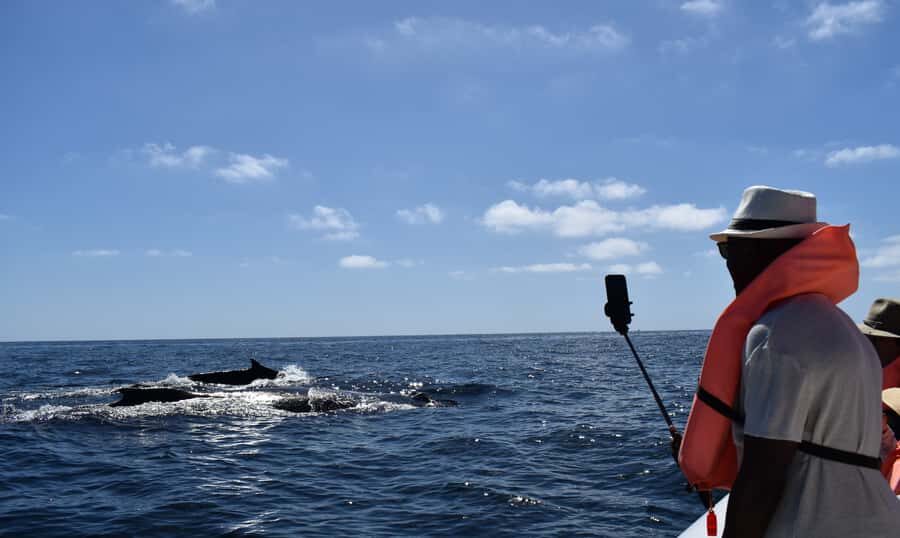
Small boats + ocean spray + cooler wind can surprise people who thought Cabo would be warm the whole trip. Bring:
- warm clothing (a jacket usually does the job)
- sunglasses (sun glare on the water is intense)
- a camera (you’ll want it ready when whales surface)
- biodegradable sunscreen
- a jacket to handle spray and wind
Also, plan for wetness. There’s a chance you’ll get wet from wave spray, and that’s part of the experience. If cold makes you miserable fast, dress like you’re going to the water, not like you’re strolling the marina.
Who this tour is best for (and who should skip it)
This is a great match if you want:
- a short, efficient whale watching outing (2 hours)
- small-group attention (max 12)
- an education-forward experience with real marine context
- included photos and hydrophone listening
It’s not for everyone. The tour isn’t suitable for:
- children under 5
- pregnant women
- people with back problems
If you’re unsure where you fit, take a hard look at your comfort on a moving boat and your ability to sit comfortably for the full ride. That matters more than whether you like whales in theory.
Should you book Cabo Nature whale watching?
If whales are high on your Cabo priorities, I think this is an easy “yes” for most people. You’re paying for more than a boat ride: you’re getting hydrophone song, digital photos, and a marine biologist onboard, plus a whale-watching warranty that protects you from a no-show day.
I’d only pause if you know you’ll hate spray or wind, or if you’re in one of the groups listed as not suitable. Otherwise, this is one of those Cabo activities where the total package makes the time on the water feel worth it—fast, focused, and built for whale respect.
FAQ
How long is the whale-watching tour?
The tour lasts about 2 hours.
Where is the meeting point in Cabo?
Meet in front of La Terminal de Cabo, right in front of Breathless Hotel. The guide usually wears a green shirt with the Cabo Nature logo.
How many people are on the boat?
The boat is designed for a small group, with a maximum of 12 guests.
What kind of whales does the tour look for?
The tour targets humpback whales. Depending on weather, the search may be in the Pacific Ocean or the Sea of Cortez. Gray whales have also been reported on some outings.
Is the hydrophone included?
Yes. A hydrophone is included so you can listen to the whales singing when time allows.
Are photos included?
Yes. Digital photos are included with the tour.
What happens if we don’t see whales?
You’ll have a whale-watching warranty: if you don’t see whales during the first tour, you’ll be offered a second tour free of charge.
What should I bring, and is it suitable for everyone?
Bring warm clothing, sunglasses, a camera, biodegradable sunscreen, and a jacket. The trip can include some spray/wetness. It isn’t suitable for children under 5, pregnant travelers, or people with back problems.