REVIEW · CABO SAN LUCAS
Educational Sunrise Whale Watching with Photos Included
Book on Viator →Operated by Proyecto Cetáceo · Bookable on Viator
Whale songs start before the sun does. This early Cabo San Lucas cruise turns a normal boat ride into an educational sunrise experience, with whale sounds you can actually listen for. I love the idea of starting in the marina while the bay is quiet, then heading out as the sky shifts into Baja California Sur colors.
Two things I like a lot here: the hydrophone setup in a calm area, and the focused time searching for whales in open ocean (about 2 hours). One thing to consider is the start time—6:00 am is real early—and you’re also counting on good weather since the tour requires it.
In This Review
- Key things to know before you go
- Getting to the Cabo San Lucas marina for a real sunrise
- The quiet bay phase: listening with a hydrophone
- Spotting whales in open ocean for about two hours
- Lovers Beach, sea lion colony, and the famous arch photo stop
- Why the guide-and-captain teamwork matters
- What makes this tour educational, not just scenic
- Weather, seas, and the early-morning reality check
- What to bring for a 3-hour sunrise cruise
- Price and value: what you’re really buying
- Who this sunrise whale watch is best for
- Should you book this sunrise whale watching trip?
- FAQ
- What time does the sunrise whale watching tour start?
- How long is the tour?
- Is the tour offered in English?
- How many people are on the boat?
- Do they use a hydrophone to listen for whales?
- What happens if the weather is poor?
- Are service animals allowed?
Key things to know before you go
- 6:00 am start: You’ll be on the water as the horizon wakes up.
- Hydrophone listening: Before whale-spotting, you try to find quiet water to listen for whale songs.
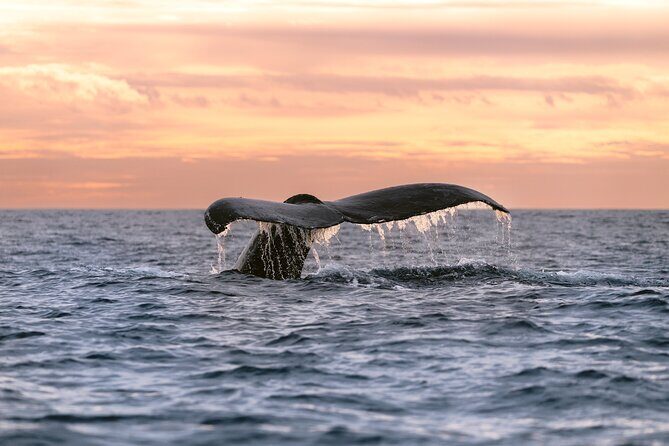
- About 2 hours on open ocean: There’s real searching time, not just a quick pass.
- Small group size: Maximum 10 people, which usually makes the experience feel more controlled.
- Photo moments on the way back: Lover’s Beach, a sea lion area, and the famous arch.
- English tour: The experience is offered in English.
Getting to the Cabo San Lucas marina for a real sunrise
This outing starts at Proyecto Cetáceo on Blvd. Paseo de la Marina in the Centro area of Cabo San Lucas. The start time is 6:00 am, so plan your morning like you would for a hiking day: quick, simple, and no “I’ll just wake up when I wake up” thinking.
The upside? You get daylight out on the water while the town is still waking up. That matters because sunrise whale watching works best when the bay is quiet and the light is fresh. You’re also getting a calmer vibe before the boat heads into open ocean.
It ends back at the meeting point, so you’re not spending your day figuring out transport. And since it’s a mobile-ticket setup, you won’t be scrambling with paper once you’re there.
You can also read our reviews of more whale watching tours in Cabo San Lucas
The quiet bay phase: listening with a hydrophone
The first part of the tour is all about sound. You head out from the Cabo San Lucas marina, then the crew looks for a quieter stretch of water so they can set up a hydrophone. This is where the educational angle becomes practical—not just a lecture.
With the hydrophone, you’re not only waiting for whales to show up. You’re tuning into their presence. That can make the whole experience feel more complete, even if you don’t see a whale immediately.
This quiet-water moment is also a nice sensory contrast. Before open-ocean searching, you get a calmer bay feel—less motion, more time to notice the marine world as a system, not a single sighting. It’s a smart way to “pay attention” on a cruise where whales are the wildcard.
Spotting whales in open ocean for about two hours
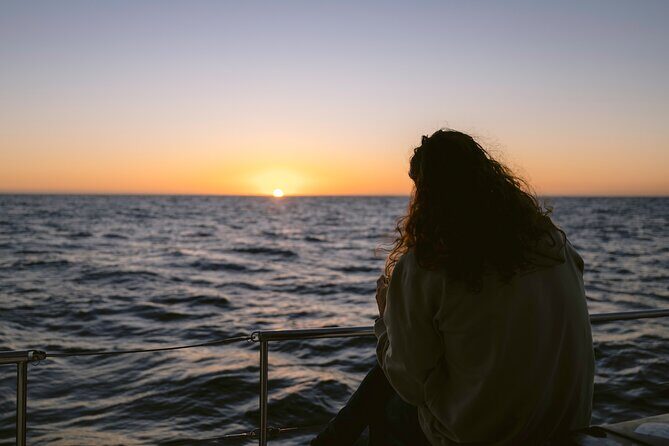
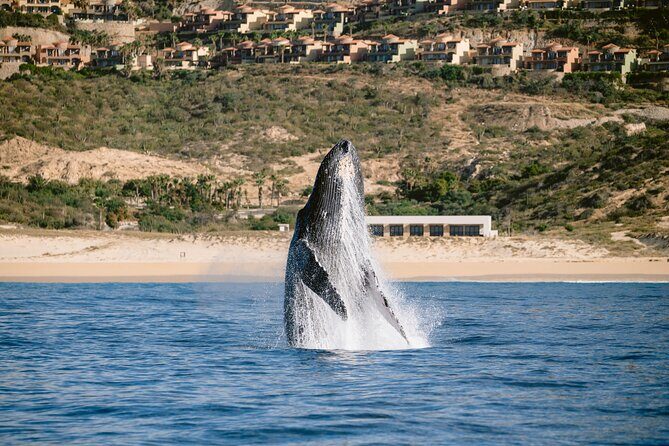
After the listening phase, the boat begins searching for whales. You’ll spend roughly 2 hours out in open ocean looking and watching.
This is the part that most people picture: scanning the water, watching for surfacing blows, and then seeing what comes next. The captain’s job here isn’t just driving. It’s timing. Good whale watching is about positioning the boat so you’re near the action without creating chaos.
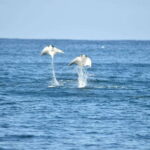
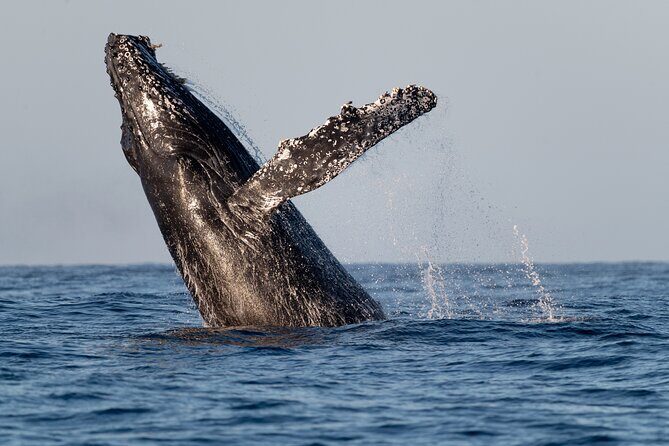
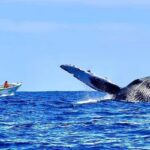
From the experience feedback, humpback sightings are a real highlight. In one case, there were multiple humpbacks and even a calf jumping in the water, which is the kind of moment you remember long after the sunrise glow fades.
Of course, whales aren’t a vending machine. Some mornings can be slow. But the structure here—hydrophone first, then dedicated search time—helps make the experience feel productive rather than purely waiting.
Lovers Beach, sea lion colony, and the famous arch photo stop
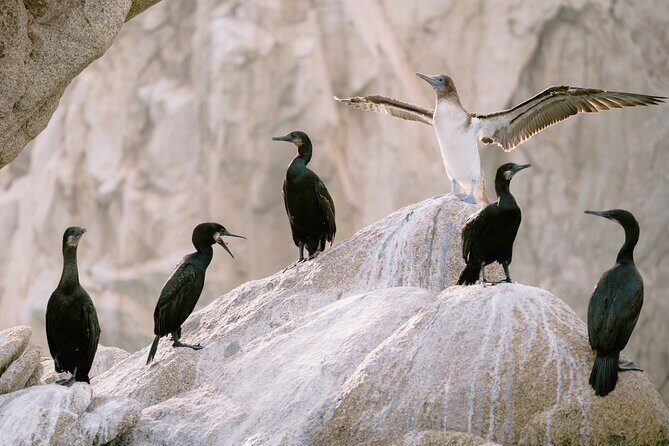
On the return trip, you don’t just go straight back to the marina. You swing by several classic spots that are known for photos and easy wildlife viewing.
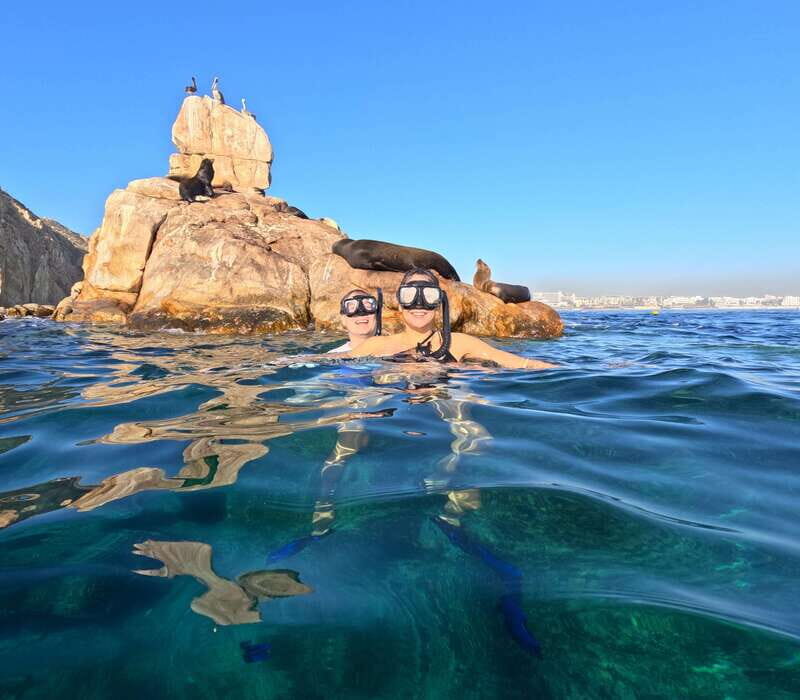
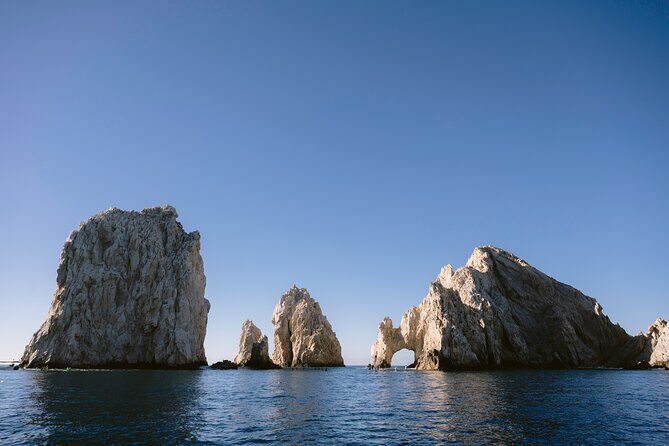
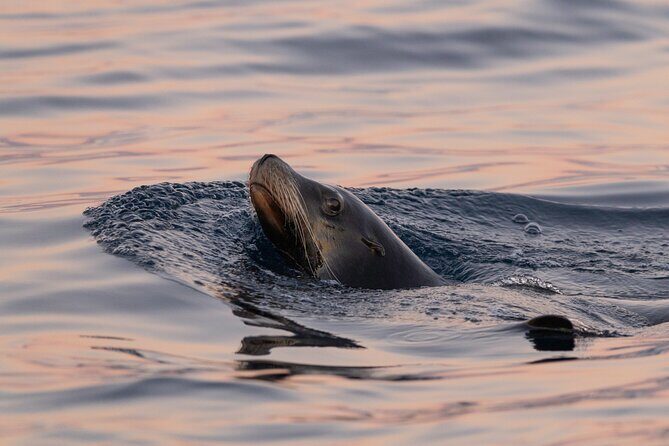
You’ll visit Lover’s Beach, the sea lion colony, and the famous arch. If you’re traveling with a camera (or your phone’s best photo settings), this is where you’ll get your “okay, I’m glad I dressed for the morning” moment—because the light will be stronger, and the stops are built around seeing and photographing the highlights.
A key consideration: these are photo stops, not long beach hangouts. You’ll get time to look, take pictures, and move on. If you’re hoping for a full stroll or extended beach time, this tour format may feel short.
Why the guide-and-captain teamwork matters
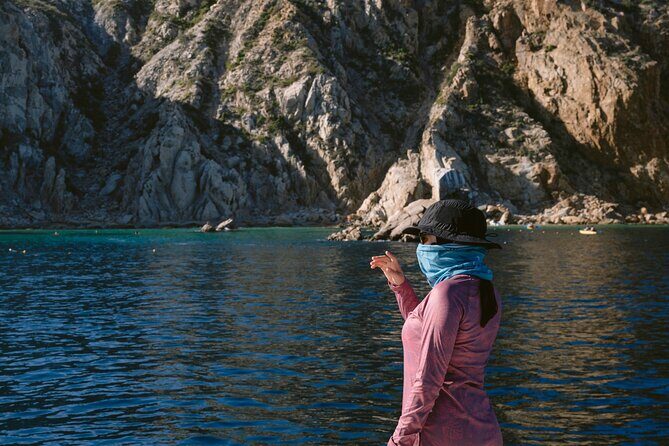
The strongest praise in the feedback centers on how the experience runs in real time—especially the guidance and how the captain positions the boat.
A named highlight is Angelica, described as an amazing guide: upbeat, pleasant, and able to explain what’s happening in a way that actually connects to what you’re seeing. That kind of guide matters because whale watching is partly science and partly patience. When the explanation is clear, you spend less time guessing and more time understanding.
The captain also gets credit for getting the group into position to see whales. That’s not just luck. It’s seamanship and attention—especially in open ocean where you can’t assume you’ll always be near wildlife.
When both roles click—guide explaining, captain finding—the cruise feels smooth and purposeful, not like a random outing where you hope for the best.
You can also read our reviews of more photography tours in Cabo San Lucas

What makes this tour educational, not just scenic
Sunrise whale watching can be pretty enough to stand on its own. But this one adds the “learn something” layer with the hydrophone and the way the crew structures the morning.
Here’s what you’re really learning without it feeling like a classroom:
- Whale communication shows up as sound, not just motion.
- Listening comes before searching, which changes how you interpret the water.
- Time on open ocean is intentional, so you’re not rushed through the chance to spot wildlife.
That’s why the experience can feel different from other whale tours. You’re participating in the hunt—eyes open for surfacing—and also in the science—listening through the hydrophone during a quiet stretch.
And since it’s offered in English, it’s easier to catch the explanations and not just enjoy the view.
Weather, seas, and the early-morning reality check
This experience requires good weather. If conditions aren’t right, the tour can be canceled and you’ll be offered a different date or a full refund. That’s important because open-ocean whale watching isn’t a “tour no matter what” situation.
Another practical factor is the morning start. A 6:00 am departure means:
- you may feel chilly early, even in a beach destination
- you’ll want to be ready before the sun fully rises
- you shouldn’t count on a slow morning routine
If you’re sensitive to choppy water, it’s worth keeping realistic expectations. The tour does go into open ocean for whale searching, so motion is part of the deal.
What to bring for a 3-hour sunrise cruise
The tour is about 3 hours long, and the main “action” happens early in the morning on the water. Packing smart helps you enjoy the whole experience instead of thinking about discomfort.
I’d plan on bringing:
- A light layer or jacket for early temps
- Sun protection for when the sunrise turns into full daylight
- A camera or phone mount/lanyard (you’ll be shooting during the arch and sea lion stops)
- Any basic motion-sickness kit if you know you need it
- Water and a small snack plan for before or after (the tour time is short)
Because it’s a small group (up to 10 people), getting comfortable quickly helps. There’s less “extra space buffer,” so dress for both cool water-to-sun transition and the time on open ocean.
Price and value: what you’re really buying
There’s no price listed here, so I can’t judge the exact cost. But I can judge the value based on what’s included in the experience design.
You’re paying for three distinct parts:
- Hydrophone listening during a quiet bay phase (the educational core)
- About 2 hours of dedicated open-ocean searching (the wildlife core)
- A return route with Lover’s Beach, sea lion viewing, and the arch photo stop (the memorable add-on)
That combination is why this tour tends to land well: it doesn’t treat whales as a single quick moment. It gives time, sound, and structure—then adds Baja highlights on the way back.
The small group size also matters for value. With fewer people on board, attention and movement tend to feel easier. You’re less likely to feel like a packed passenger looking down from a distance.
Who this sunrise whale watch is best for
This is a great pick if you want a whale trip with an actual learning component. It also fits well if you like mornings that start with a mission, not a slow wake-up.
It’s likely a good match for:
- people who love wildlife and don’t mind waiting for the right moment
- anyone interested in whale communication through hydrophone listening
- small-group style outings (max 10 people)
- English-speaking visitors who want clear explanations
On logistics, it’s built for convenience in the area: service animals are allowed, it’s near public transportation, and most people can participate.
Should you book this sunrise whale watching trip?
If you’re the type who enjoys early starts when the world is quiet, I’d say yes. The combination of a true sunrise window, hydrophone listening, and a focused whale search makes this more than a sightseeing cruise.
Book it if:
- you want an educational twist, not just a ride
- you’re happy trading a late morning for better chances to catch whale activity
- you’d like photo stops on the way back at Lover’s Beach, the sea lion area, and the arch
Skip it if:
- you strongly dislike early wake-ups
- you’re looking for long on-land time at beaches or a relaxed, flexible schedule
- you need guaranteed whale sightings (nothing in whale watching is guaranteed)
In short: if your goal is a structured, small-group sunrise experience with real attention to whales, this is a solid choice.
FAQ
What time does the sunrise whale watching tour start?
The tour starts at 6:00 am.
How long is the tour?
The duration is about 3 hours.
Is the tour offered in English?
Yes, the tour is offered in English.
How many people are on the boat?
This activity has a maximum of 10 travelers.
Do they use a hydrophone to listen for whales?
Yes. The crew tries to find a quiet area first so they can set up a hydrophone to listen for whales.
What happens if the weather is poor?
This experience requires good weather. If it’s canceled due to poor weather, you’ll be offered a different date or a full refund.
Are service animals allowed?
Yes, service animals are allowed.
If you want, tell me what time of year you’re going and whether you get seasick easily, and I’ll suggest how to plan your morning and what to prioritize on deck.