REVIEW · CABO SAN LUCAS
Cabo San Lucas: UTV Razor Tour of Migriño Desert and Beach
Book on GetYourGuide →Operated by Puerto Vallarta Net · Bookable on GetYourGuide
A 2-hour RZR run can feel like a whole vacation. You’ll bounce from desert trails to Migriño Beach dunes in a Razor-style 4×4 and watch Baja’s scenery change fast, from dry riverbeds to volcanic-looking formations. I like that the route is built for variety, not just a straight line.
I also like the human side: you’re not just driving—you get a guide who points out Baja flora and fauna, plus the tour wraps with an included tequila tasting. One consideration to keep in mind is that dirt and dust can be intense, so your comfort (and photos) depends a lot on what you wear and how you protect your face.
In This Review
- Key Things to Know Before You Hit the Sand (and Dust)
- Cabo’s UTV Adventure: Why This Route Feels Different From Most Tours
- The RZR Plan in Plain English: From Desert Trails to Migriño Beach
- What you’ll likely see (and learn) as you ride
- The Drive Details That Matter: Dust, Visibility, and Comfort
- Safety equipment is included, but you should still be alert
- Stops and Scenes: What Each Environment Adds to the Ride
- Mountains and rugged trails
- Canyons and dramatic cuts
- The dry riverbed stretch
- Migriño Beach dunes and ocean cliffs
- Tequila Tasting: A Fun Finish or an Awkward Detour?
- How I’d handle it if tequila isn’t your thing
- Price and Value: What $183 Really Buys (and What It Doesn’t)
- Who This Tour Fits Best (and Who Should Skip It)
- It’s not for everyone
- Practical Tips That Make This Ride Much Better
- Should You Book Cabo’s Migriño UTV Razor Tour?
Key Things to Know Before You Hit the Sand (and Dust)
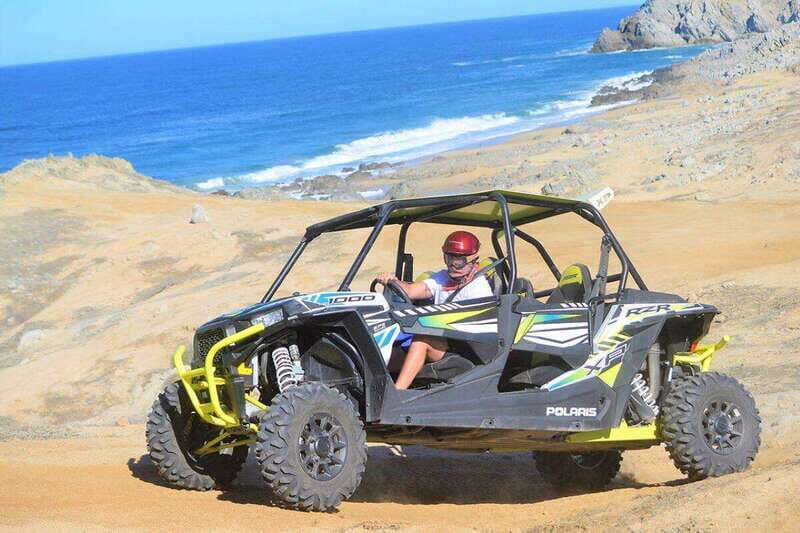
- RZR 4×4 power for canyons, mountains, a massive dry riverbed, and dune-lined beach stretches
- Migriño Beach features golden sand dunes and ocean-side cliffs for easy photo moments
- Baja ecosystem guide coverage means you’ll learn about desert life along the way, not just scenery
- Tequila tasting is included, so plan for it being part of the wrap-up
- Park entry isn’t included and is mandatory, so your final spend can be higher than the base price
Cabo’s UTV Adventure: Why This Route Feels Different From Most Tours
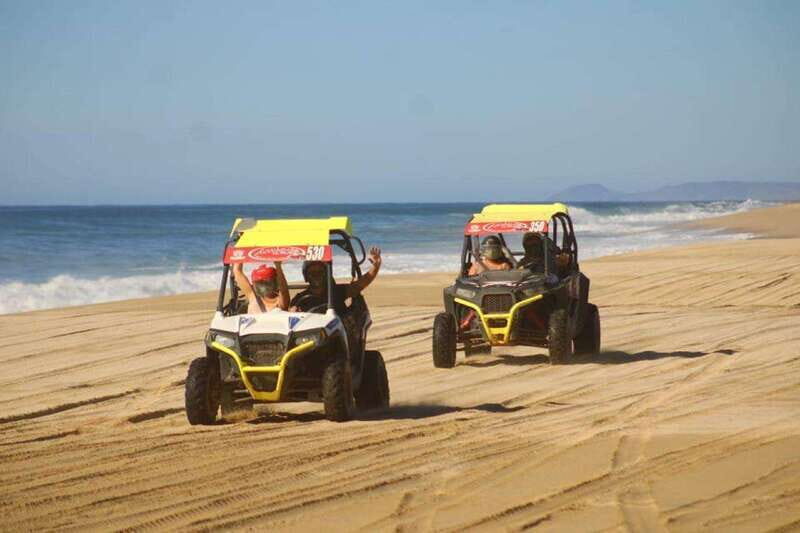
This is the kind of tour where you stop thinking in terms of landmarks and start thinking in terms of terrain. One stretch feels like you’re crawling through rocky backcountry. Another feels like you’re skimming dune edges with the ocean nearby. The mix is the point, and it’s why this 2-hour ride doesn’t feel repetitive.
You’re on a small-group setup too, limited to 10 participants. That matters because fewer people usually means less waiting, more time moving, and a better chance your guide can answer questions. And since the experience includes hotel pickup and drop-off, you’re not trying to coordinate taxis or rental logistics after a dusty day.
Now, the reality: this is not a polished, slow sightseeing drive. It’s off-road. That means you should expect a physical experience: wind, vibration, grit, and that dry Baja air that makes everything feel a little closer to the action than you’re used to.
You can also read our reviews of more tours and experiences in Cabo San Lucas.

The RZR Plan in Plain English: From Desert Trails to Migriño Beach
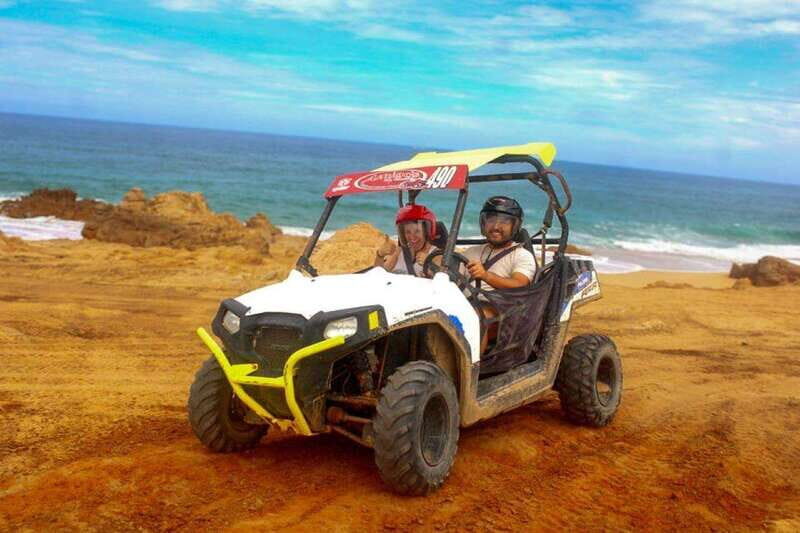
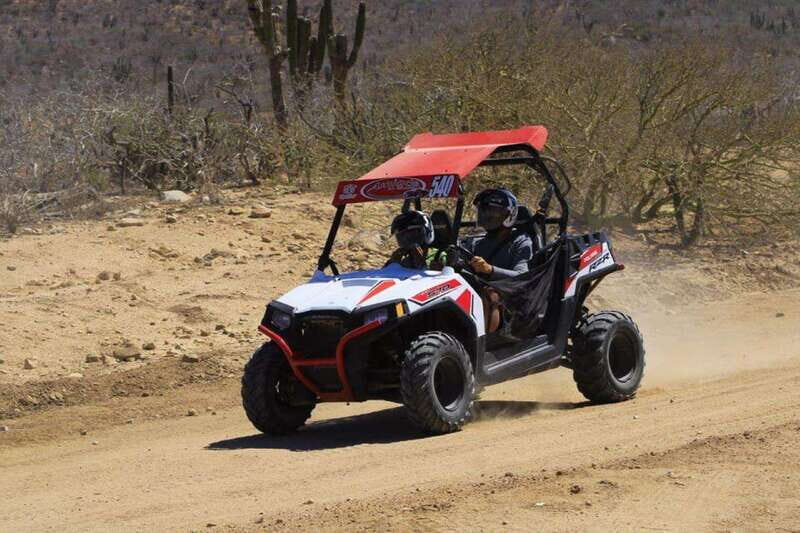
The route starts inland and builds toward the coast. You’ll ride over mountains and desert trails, passing through dramatic canyons and rugged terrain. Along the way, the tour highlights Baja’s volcanic formations, which is a fancy way of saying the rocks and shapes can look otherworldly. If you’re the kind of person who loves “how did this place get like that?” visuals, this portion delivers.
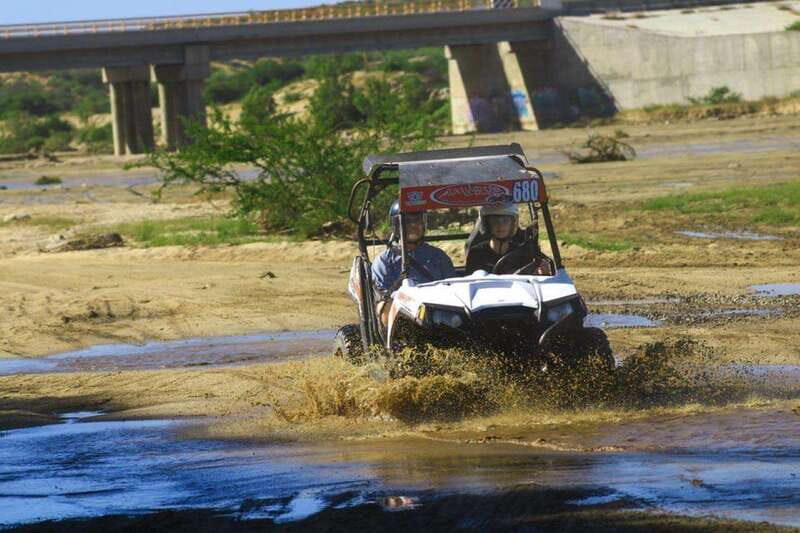
Then comes the big transition. You’ll cross a massive dry riverbed, one of those places that looks calm from a distance but feels powerful up close. Dry riverbeds in arid regions often show the long-term work of water, even if you’re not seeing water on the ground. From the vehicle, you’ll likely get a sense of how wide and open these dry corridors really are.
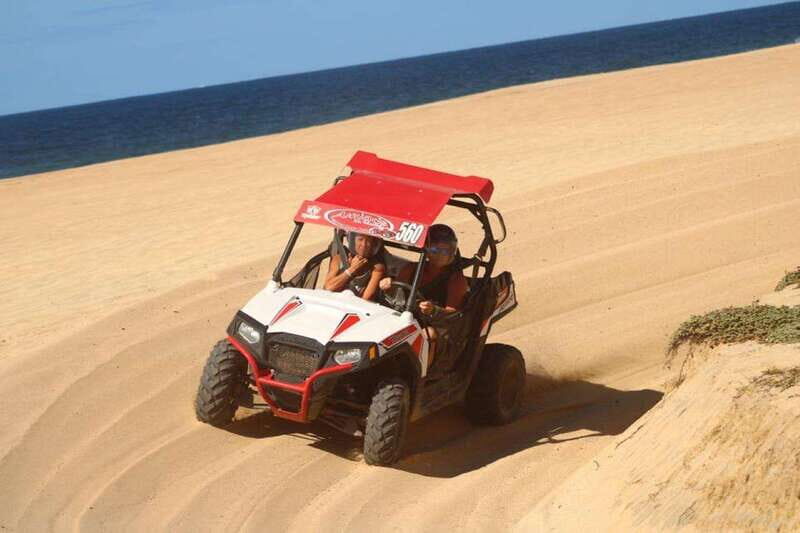
After that, the tour shifts to beach country. You head to Migriño Beach, where you can expect golden sand dunes and ocean-side cliffs. The sand is where the fun gets extra physical, too. Even when the ride isn’t “full speed,” dune terrain changes your perspective every few minutes. It’s also where photos tend to look best because you’re getting moving foregrounds and coastline backgrounds instead of static viewpoints.
What you’ll likely see (and learn) as you ride
The tour is described as covering a diverse ecosystem, and the guide is there for the details. That usually means you’ll get quick explanations of how desert plants handle heat and dryness, and what kinds of life survive out here. You’ll also get fields of wildflowers mentioned as part of the scenery. If the timing lines up, those flower patches can turn a gritty trail into something with color and texture.
The Drive Details That Matter: Dust, Visibility, and Comfort

I’m going to be blunt here: you’ll want to prepare for dust. The roads can get extremely dusty, and visibility can get reduced when the vehicle ahead throws powder into the air. Sunglasses help, but they’re not enough if you hate the feeling of grit in your mouth or eyes.
Your best comfort hack is simple: bring a way to cover your face. A scarf or bandana isn’t on the standard “bring” list, but it’s smart. If you don’t want to inhale dust, you’ll thank yourself for having one. Closed-toe shoes are included in the requirements for a reason, too. Off-road debris and uneven footing aren’t the place for open sandals.
Also, check your own expectations about photos. If the dust is thick, your camera might still work, but lenses will need wiping. Bright sunlight on sand can also create glare. So if you care about getting clean shots, plan to shoot selectively and keep your lens cloth handy.
Safety equipment is included, but you should still be alert
The tour includes safety equipment and a guide, which is a solid baseline. Still, it’s worth paying attention to the vehicle you’re assigned. Off-road gear takes wear, and tire condition matters a lot when traction shifts from rock to sand. If anything looks off, ask. You’re not being dramatic. You’re being smart.



Stops and Scenes: What Each Environment Adds to the Ride
This tour keeps changing your surroundings, and that’s what makes it feel like more than “just an ATV.” Here’s how each terrain type changes the experience.
Mountains and rugged trails
In the mountain sections, the ride tends to feel more technical. You’ll likely notice bouncing over uneven ground and the guide’s focus on keeping the group together. The scenery here is usually about scale: mountain ranges, depth, and those long Baja views that make you look up more than you look forward.
A drawback of this kind of terrain is that you’ll get more vibration. If you have any sensitivity to motion or a history of back issues, the “not suitable for” note in the tour info is there for a reason.
Canyons and dramatic cuts
Canyons add drama to the drive because the walls and rock angles shape light and sound. Even without a formal “viewpoint stop,” canyon sections can make the ride feel cinematic. The tradeoff is that you’ll still be moving, so there’s less time for lingering photos unless the group slows down.
The dry riverbed stretch
This is the part that often surprises people. From above, a dry riverbed can look like a simple cut in the land. From the vehicle, it can feel like you’re crossing a natural corridor built by past water flow. You get width, texture, and a strong sense of how the terrain channels movement.
Migriño Beach dunes and ocean cliffs
Beach time is where you get the payoff. Dunes give you that playful sense of climbing and descending, while cliffs and coastline give you the visual reward. This is also the portion where you’ll probably feel most free for photos because the scenery opens up.
One positive detail from a top-rated experience: the beach ride itself is described as very impressive. That lines up with how most people react when they finally get to the coastline, especially if they started inland in dry desert.
Tequila Tasting: A Fun Finish or an Awkward Detour?
Tequila tasting is included, and it’s part of the tour wrap-up. For people who enjoy it, this can feel like a nice cultural stop after a rough-and-rugged ride. It’s also often a chance to cool down and sit for a few minutes.
But if you don’t drink, don’t assume you’ll be done quickly. Some tours can make the tasting feel mandatory because it’s scheduled as a group moment. If you’re not interested, I’d plan for it to be part of your overall experience timing, even if you skip the pour.
How I’d handle it if tequila isn’t your thing
- Decide ahead of time whether you’ll sample or skip.
- Bring a small mindset shift: treat it as a break and a story session, not a night out.
- If you’re sensitive to smells or alcohol, let your guide know early, calmly, so expectations match.
Price and Value: What $183 Really Buys (and What It Doesn’t)
The base price is listed as $183 per group up to 2, and the ride is 2 hours long, including pickup and drop-off, an RZR 4×4, safety equipment, a guide, and transportation. For many travelers, the value comes from not having to arrange vehicles, routes, and a guide on your own.
But you should budget for mandatory add-ons. The tour info says park entrance is mandatory at $25 USD per person. For a group of two, that’s another $50 on top right away. Collision insurance is also not included, with a stated cost of $50 USD or T/C (you’ll want to read what T/C refers to when you book).
Then there’s the “optional but likely” category:
- Food and drinks are not included.
- Photos are not included (and sold separately; one review notes pricing starting around $45).
So the real value math looks like this:
- You’re paying for transportation + gear + guide + vehicle access.
- You’re also paying more once the mandatory park fee hits.
- If you buy photos, budget extra.
In practice, I’d treat this as a $183 experience that can become closer to the mid-$200s for a couple, depending on park fees and whether you add collision insurance or photos.
Who This Tour Fits Best (and Who Should Skip It)
This is best for people who want movement, not just views. It suits travelers who enjoy a physical ride, want coastline dunes, and like learning quick desert facts from a guide while still having fun.
It’s also a decent option for first-timers because you’re not driving solo in a big complicated system. You’re guided, you have safety gear, and the route is built around off-road highlights.
It’s not for everyone
The tour info says it’s not suitable for pregnant women, people with back problems, or people with recent surgeries. Off-road riding adds vibration and jostling, so those cautions are not small print.
If you’re easily motion-sick, you may also want to be careful, even though that specific issue isn’t stated. The ride type itself suggests you should evaluate your tolerance.
Practical Tips That Make This Ride Much Better
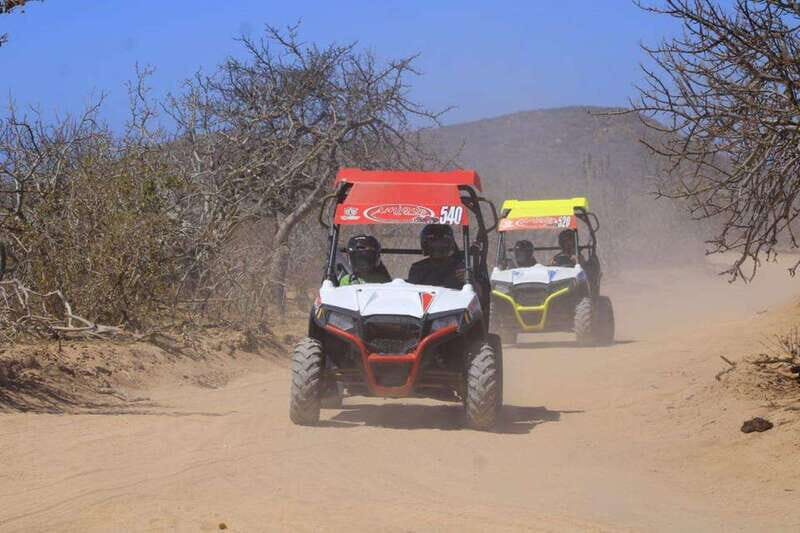
If you want this tour to feel like a win from start to finish, focus on comfort and timing.
Wear and bring:
- Sunglasses and sunscreen (sun hits hard on sand and dry terrain)
- Closed-toe shoes for grip and foot protection
- Cash, because mandatory fees and any photo purchases are handled on-site
- A bandana or scarf if dust bothers you
Plan your expectations:
- This is a short tour, but total time from pickup to drop-off can feel longer because the day includes transitions and group moments like tequila tasting.
- If you’re chasing specific lighting (like late-day beach photos), ask your operator when you’ll actually reach the sand.
Group vibe:
- Small group size means you should be ready to follow the guide’s lead and stay together. If you wander off your own pace, you can lose the flow.
Should You Book Cabo’s Migriño UTV Razor Tour?
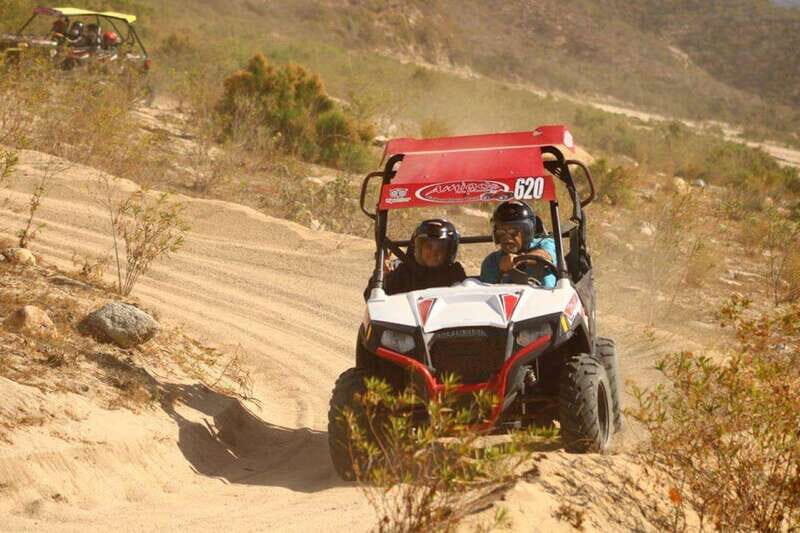
If you want one of Cabo’s most varied short off-road experiences—desert, canyons, dry riverbed, and then real beach dunes—this is a strong choice. The best moments are the coastal stretch and the route variety, and the inclusion of a guide plus an ecosystem explanation adds real substance beyond the adrenaline.
I’d only hesitate if you’re very sensitive to dust, hate scheduled group stops, or you want a quiet, low-jolt experience. And do your homework on the add-ons: the mandatory park entry fee and potential photo upsells can change the final cost.
If you go in prepared—with face protection, comfortable shoes, and a realistic view of the schedule—you’re likely to come away thinking the beach ride alone was worth it.