REVIEW · CABO SAN LUCAS
Los Cabos: Catamaran Whale Watching Cruise
Book on GetYourGuide →Operated by Next Experience Travel · Bookable on GetYourGuide
Whales in Baja are the real show. This Los Cabos catamaran cruise gives you a serious chance to see gray, humpback, and blue whales as they migrate to the region. I like that it mixes wildlife spotting with big-name scenery, including the Arch of Cabo San Lucas, and then keeps you comfortable with onboard food and drinks. One thing to think about first: it’s not a good fit if you get seasick easily, since the ride goes out into the Pacific.
You’ll spend the day on a stable-feeling catamaran doing a 2-hour cruise into open water, guided in English and Spanish by the crew. I especially like the focus on the whales themselves, including the warm-water moments when mothers and calves swim together. The possible downside is that wildlife viewing can’t be forced, so if whales are farther out on the day, you’ll have to rely on the crew’s spotting and your own patience.
For many people, this is the kind of trip that hits both sides of travel: learning what you’re seeing and getting the photos that make friends ask, Where was that? Plan for sun and water time, and you’ll have a great chance of turning whale-watching into a highlight instead of a long boat ride.
In This Review
- Key things to know before you go
- Why Los Cabos whale season is the whole point
- Getting to the catamaran: pickup and check-in that actually matters
- The 2-hour Pacific cruise: where spotting really happens
- Gray, humpback, and blue whales: what to look for on the water
- Mothers and calves: the emotional highlight you can actually plan for
- Cabo San Lucas views: the Arch and coastline from the sea
- Food, open bar, and comfort during a 4-hour day
- Price and value: what $95 buys you in real terms
- Practical tips so your whale watch feels smooth
- Who this cruise is best for
- Should you book this Los Cabos catamaran whale watching cruise?
- FAQ
- How long is the whale watching cruise?
- What whales can I expect to see?
- Are meals and drinks included?
- Is hotel pickup included?
- Where do I meet for the tour?
- What should I bring?
- Is the tour available year-round?
- Who should avoid this activity?
Key things to know before you go
- Dec 15–Mar 31 only: This is seasonal whale territory, so book within the window if you want the best odds.
- 2 hours on the water, 4 hours total: Hotel pickup and drop-off are baked into the day.
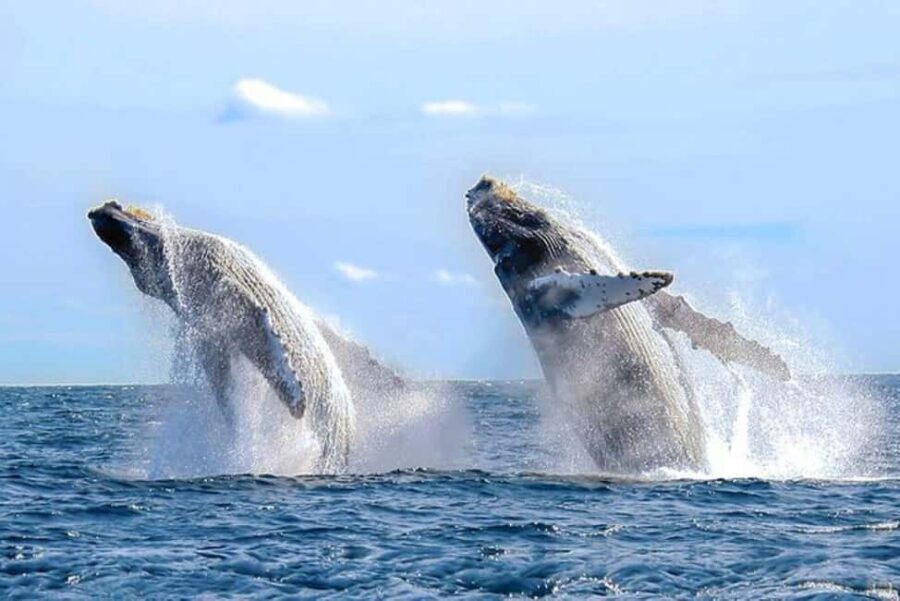
- Gray, humpback, and blue whales: The crew helps you identify species and behaviors you spot offshore.
- Mothers and calves are a focus: Watch for the tender moments the crew will steer your attention toward.
- Meal plus an open bar: Snacks are included, and you’ll also have beer, spirits, and more.
- Not for everyone: Skip this if you’re pregnant, have back problems, or are prone to seasickness.
Why Los Cabos whale season is the whole point
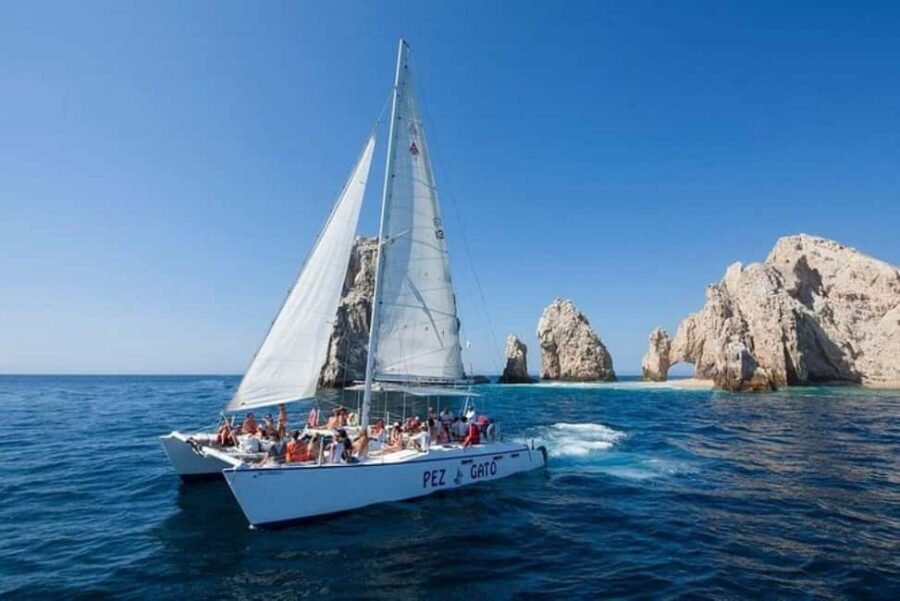
Los Cabos whale watching works because this corner of Baja sits on a migration route. During the season, whales move into warmer waters along the Pacific side for key life stages. That’s what makes a trip like this more than a sightseeing boat. You’re not just looking for a splash. You’re looking for behavior—how whales breathe, how they travel, and how they move as a family group.
On this cruise, the goal is pretty clear: spotting multiple species as they’re in the area. The tour highlights gray, humpback, and blue whales. Blue whales are the big-ticket animal in the region, and humpbacks are known for their presence and patterns. Gray whales also have a strong connection to Baja waters. Seeing more than one kind of whale in a single outing is one of the reasons this format is so popular when the season lines up.
And then there’s the “you’re in the right place” factor. Los Cabos is visually striking from the water. Even if you’re not a wildlife nut, the coastline and the famous natural landmark make the day feel cinematic.
You can also read our reviews of more boat tours in Cabo San Lucas



Getting to the catamaran: pickup and check-in that actually matters
This tour is built around convenience. Even though the main action is the ocean cruise, your day is scheduled around hotel pickup and drop-off (optional), and that’s included in the total time. The pickup starts an hour before the tour, and you should be ready in your lobby 15 minutes before the scheduled pickup.
The check-in point is in Gali Plaza (Local 39), across from the entrance to Hotel Finisterra. If you’re being picked up, you still want to keep an eye on your timing because drivers can only wait up to 5 minutes.
If you’re arriving by cruise ship, you’ll need to provide your ship name and docking time so you can meet up on schedule. If you’re making your own way, plan to get to the Pez Gato Check-in Desk at least 20 minutes before departure. It’s inside Gali Plaza (Local 39), across from Hotel Sandos Finisterra.
Why I think this is worth paying attention to: whale-watching isn’t a slow, flexible activity. When the boat is ready to leave, it’s ready. Getting there on time helps you start the cruise without stress, which also helps your chances of being positioned well for spotting.
The 2-hour Pacific cruise: where spotting really happens

The trip’s heart is a 2-hour cruise into the Pacific Ocean, and that’s where you’ll look for the whales as they migrate toward Los Cabos. This isn’t a short harbor shuffle. You’re out on open water, scanning for spouts, movement, and the surface patterns that give clues about what’s below.
The crew plays a big role here. They’re there to help you identify different whale species and interpret what you’re seeing. That matters because whales don’t announce themselves like birds do. They surface briefly, then move. Knowing what behaviors to look for helps you stop guessing and start recognizing patterns.
You’ll also want to use your time smartly once you’re on the water:
- Bring a camera, but don’t only shoot. Watch first, then photograph.
- Keep your sunglasses on and scan steadily. Bright sun can wash out the sea surface.
- If the crew calls out a sighting, go with where they direct you for the best viewing angle.
One practical consideration: since wildlife sightings can vary by day, your best experience comes from staying focused and not expecting the same kind of close encounter every single minute. This is a cruise designed to improve your odds with crew guidance and the right season, not a guarantee of a certain number of whales.
Gray, humpback, and blue whales: what to look for on the water
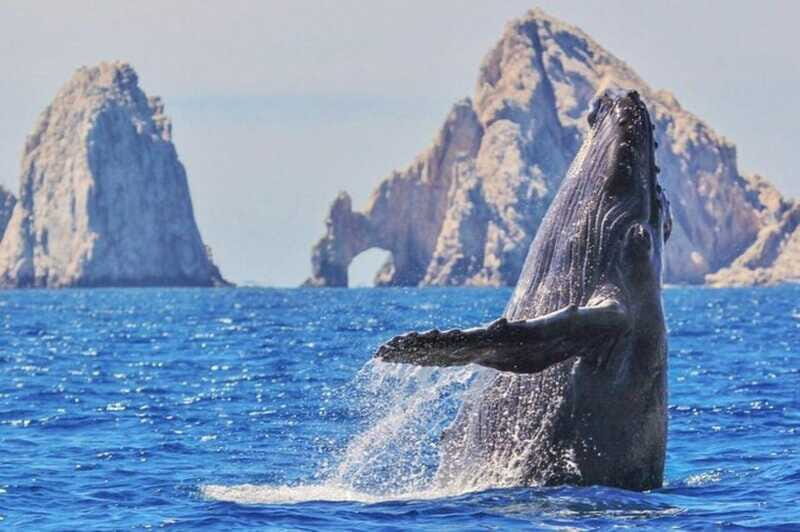
The tour specifically targets gray, humpback, and blue whales, and the crew’s job is to help you understand what you’re spotting and what it likely means. Even without going deep into scientific terms, you can get real value from learning the basics during the cruise.
Here’s the mindset I recommend: treat each whale encounter like a short chapter. The crew can explain what’s typical for the species you’re seeing, and you’ll pick up cues that make the next sighting easier to interpret.
The tour also emphasizes that you’ll get close enough for meaningful viewing when conditions allow. That up-close feeling is the difference between seeing a whale as a tiny dot and seeing it as a living animal with a pattern—breathing, traveling, and reacting to its environment.
If you’re hoping for the most memorable moments, focus on behavior rather than just location. Whale-watching becomes special when you catch the rhythm of the animal, not just the initial surprise of seeing it.
Mothers and calves: the emotional highlight you can actually plan for

The most memorable part of many whale trips is the family behavior, and this one is built around it. The experience highlights moments when mothers and calves swim together. That’s the kind of scene that can land harder than you expect, because it looks gentle and purposeful at the surface level—even though whales are powerful animals.
Why this matters for your planning: a cruise that simply says whales are present can still feel random. A cruise that draws your attention to mothers and calves gives the crew a mission that lines up with the way you’ll remember the day later. It’s also a reminder that these whales aren’t just passing through. They’re using this time and place for life stages that depend on warm water.
I’d suggest you do two things during these moments:
- Watch longer than you think you need to. Calves and mothers can drift, pause, and then move again.
- Keep your lens handy, but don’t lock yourself into photographing. The eye often sees more movement than a camera can quickly frame.
That blend—behavior + guidance—turns this from a sightseeing activity into a real wildlife watching experience.
You can also read our reviews of more sailing experiences in Cabo San Lucas





Cabo San Lucas views: the Arch and coastline from the sea
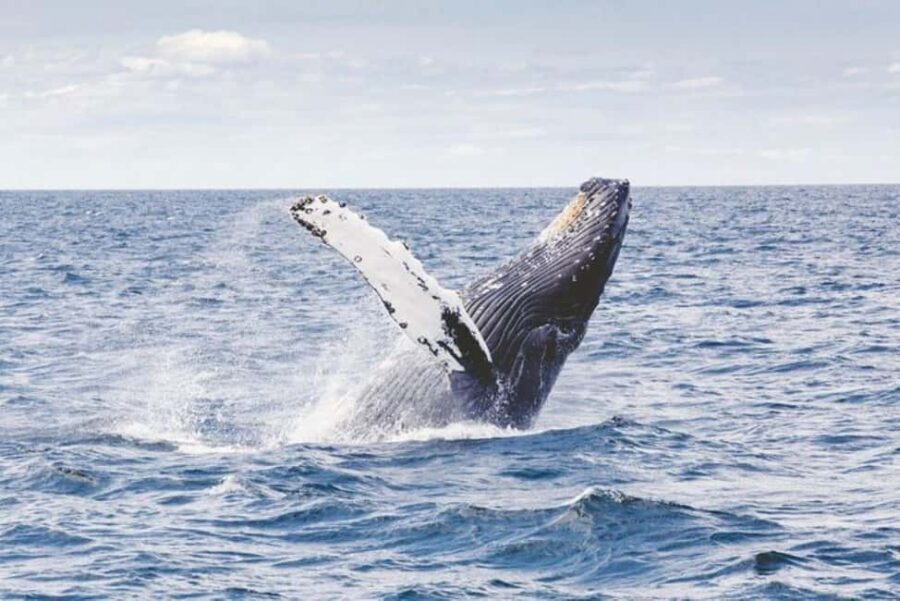
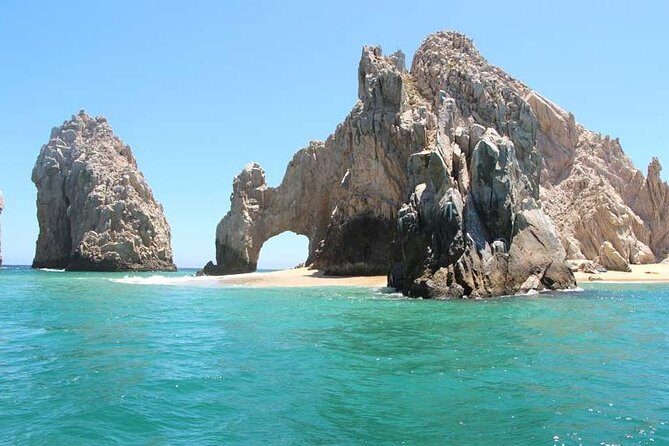
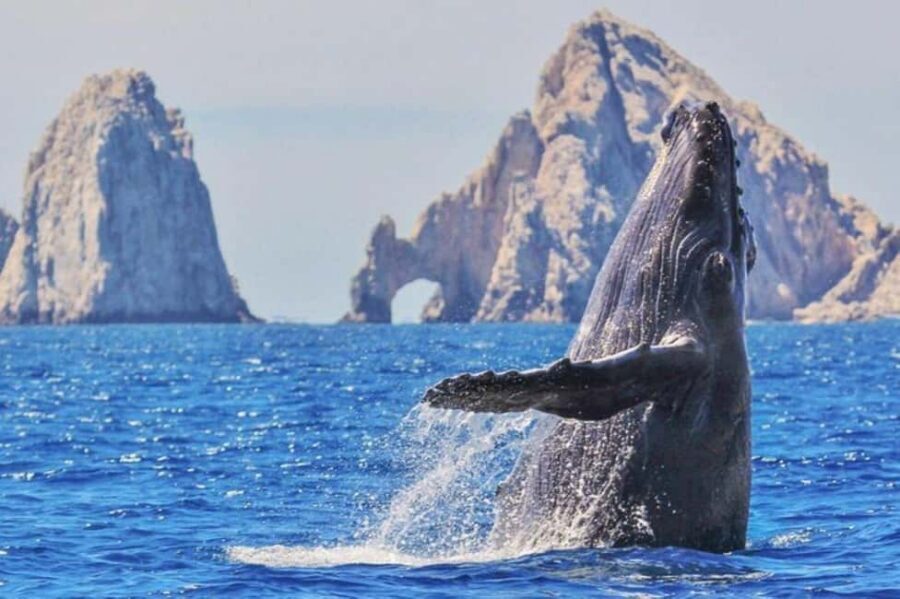
Between whale spotting, you get the scenery. The cruise includes views of the Los Cabos coastline and the iconic Arch of Cabo San Lucas. The arch is the kind of landmark that instantly anchors your photos to a place, even if you’ve seen pictures before.
From the water, the arch sits in a dramatic setting. The coastline gives you context for where you are, and it also breaks up the mental fatigue of scanning the horizon nonstop.
For many people, this is what makes the timing worth it even on slower whale days. If you get a moment with fewer whales or longer searches, you still have a visual payoff: cliffs, shorelines, and that recognizable arch shape.
Food, open bar, and comfort during a 4-hour day

Let’s talk about the part people underestimate: staying comfortable for 4 hours. This tour includes snacks and an onboard meal, plus an open bar. The drinks listed include beer and spirits, and there’s more beyond that.
That combination changes how the day feels. Whale-watching can turn into a waiting game. Having food and drinks on board helps you keep your energy up while you scan for movement. It also makes the trip feel like a complete outing, not just transportation to an uncertain wildlife moment.
A smart tip: eat early and stay hydrated. Even if you’re excited, sun and salt air can sneak up on you. Bring sunglasses and sunscreen because you’ll be exposed while you’re on the water.
The ride is on a catamaran, which generally makes the motion feel less intense than a single-hull boat for many people. But if you’re prone to seasickness, this still may not work for you. The tour specifically lists it as not suitable for people who are prone to seasickness, and I’d take that seriously.
Price and value: what $95 buys you in real terms
At $95 per person, this isn’t a budget snack tour, but it also isn’t priced like a private expedition. The value comes from what’s bundled into the experience:
- A total 4-hour outing
- A 2-hour cruise into the Pacific
- Snacks and an onboard meal
- An open bar (beer, spirits, and more)
- Crew guidance in English and Spanish
- Hotel pickup and drop-off for those who opt in
For a reader, the key is not the number. It’s the package. You’re getting time on the water during a specific whale season, plus the comforts that keep you comfortable while you wait for sightings.
If you’re comparing tours, look at what’s included. Tours that charge extra for food or drinks can add up fast. Here, those parts are clearly part of the offering, so you can plan your spending instead of guessing.
One more value factor: this operates only from Dec 15 to Mar 31. If your travel dates land in that window, a whale watch becomes more likely to deliver the animal encounters you came for. Timing is part of the value too.
Practical tips so your whale watch feels smooth
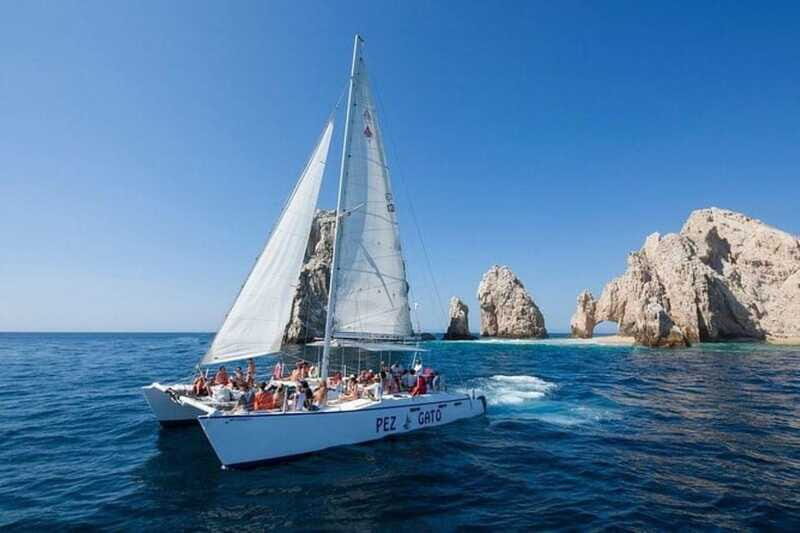
You’ll have the best time if you prepare for a boat day in Baja sun. The tour lists what to bring: sunglasses, a hat, a camera, sunscreen, and comfortable clothes. That’s exactly what I’d tell a friend packing for a sea day.
Also, remember what’s not allowed. Smoking is not permitted, and feeding animals is off the table. That keeps things safer for wildlife and for you.
For health and comfort, the tour notes it’s not suitable if you’re pregnant, have back problems, or are prone to seasickness. If you fall into any of those categories, I’d treat this as a hard stop rather than a maybe.
One last practical thought: plan your expectations. Whale-watching is not a video game where you level up on demand. You’re going to work a bit—scanning, listening to the crew, and staying ready when a sighting happens.
Who this cruise is best for
This is a strong match if you want:
- A guided whale watching experience with crew help identifying species and behavior
- A day that includes both wildlife and major Cabo scenery
- An outing with food and drinks included, so you’re not thinking about the clock the whole time
- A straightforward, season-based activity that runs in a clear seasonal window
This might not be the best match if:
- You get seasick easily (the tour flags this clearly)
- You’re pregnant or dealing with back problems
- You hate any time spent scanning the ocean for brief surface moments
If you’re traveling as a couple or with friends who want a shared highlight, this kind of cruise can be a win because it gives you both stories: what you saw and what the coastline looked like along the way.
Should you book this Los Cabos catamaran whale watching cruise?
If your trip lines up with Dec 15 to Mar 31, I’d seriously consider booking. You’re choosing a season-specific outing, and the day is built around real whale viewing rather than just a scenic cruise. The open bar and onboard meal help you enjoy the waiting time, and the crew guidance in English and Spanish improves your odds of actually understanding what you’re spotting.
I’d only hold off if seasickness, pregnancy, or back issues are a factor for you. And if you’re the type who needs certainty—like, I must see a whale right away—know that wildlife tours don’t work like that. You’re buying access to the right conditions and expert help, not a guaranteed outcome.
Bottom line: for many visitors to Los Cabos in whale season, this is one of the most efficient ways to see whales, get the iconic arch photos, and still come back with full stomachs and good spirits.
FAQ
How long is the whale watching cruise?
The total tour time is 4 hours, including time for pickup and drop-off. The scenic cruise portion is 2 hours.
What whales can I expect to see?
The experience highlights gray whales, humpback whales, and blue whales during their migration to Los Cabos.
Are meals and drinks included?
Yes. You’ll get snacks plus an onboard meal, and there’s a domestic open bar that includes beer, spirits, and more.
Is hotel pickup included?
Hotel pickup is optional, and it’s included in the total tour time.
Where do I meet for the tour?
Meet at the check-in desk in Gali Plaza (Local 39), across from the entrance to Hotel Finisterra.
What should I bring?
Bring sunglasses, a hat, a camera, sunscreen, and comfortable clothes.
Is the tour available year-round?
No. It’s available from December 15th to March 31st.
Who should avoid this activity?
It’s not suitable for pregnant women, people with back problems, and people prone to seasickness.