REVIEW · CABO SAN LUCAS
Half Day Surf Lesson in Costa Azul
Book on GetYourGuide →Operated by High Tide Los Cabos · Bookable on GetYourGuide
Fresh sea air and your first real wave.
This 3-hour surf lesson in Costa Azul turns Cabo’s warm, forgiving waters into a fun classroom for beginners, with soft boards that are easier to handle and safer when you wipe out. I love the hands-on coaching style (you’re not left to guess), and I also like the team’s focus on getting everyone standing, not just trying. One consideration: it’s not a good fit if you have back problems, are pregnant, or have serious medical conditions.
If you’re traveling as a family, you’ll like the setup for non-surfers too: they can book a companion spot and spend the session shaded in camp while you’re in the water. The only drawback I’d flag is that you’ll want to show up prepared for sun and salt—this is outdoors, and you’ll be bringing your own swimsuit, towel, sandals, and sunscreen.
In This Review
- Key things I’d watch for before you book
- Costa Azul surf in half a day: what makes it worth $115
- The 3-hour flow: how the lesson keeps you from standing around
- What you learn: from first pop-up to actually riding
- Soft board setup and safety: why the equipment matters more than you think
- Coaches and group size: the big difference between a good lesson and a forgettable one
- Watching the action: a real plan for kids and non-surfers
- Pickup in Cabo: getting there without turning the trip into a chore
- What to bring (and what not to stress about)
- Photos in the moment: the kind of “proof” that actually helps
- When weather changes your plans: safety first, with options
- Who should book this surf lesson (and who should skip it)
- FAQ
- FAQ
- How long is the half-day surf lesson?
- What times can I choose for this experience?
- What’s included in the price?
- Can non-surfers watch from the beach?
- What should I bring to the lesson?
- What happens if the weather is unsafe?
- Should you book this half-day surf lesson in Costa Azul?
Key things I’d watch for before you book
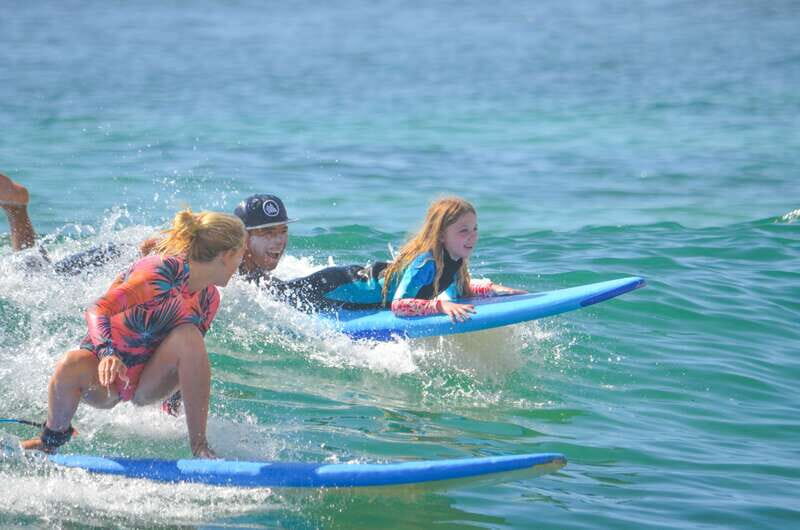
- Soft boards for beginners and intermediates help you get up faster and reduce the sting of falls
- English/Spanish instructors with a coach-to-surfer ratio of about 1 guide per 3 people
- 9 a.m. is usually the smarter pick since afternoons can be windier
- Companion spots let kids and non-surfers watch comfortably with chair, umbrella, snacks, and refreshments
- Hotel pickup is available across San José del Cabo, Cabo San Lucas, and the corridor
Costa Azul surf in half a day: what makes it worth $115
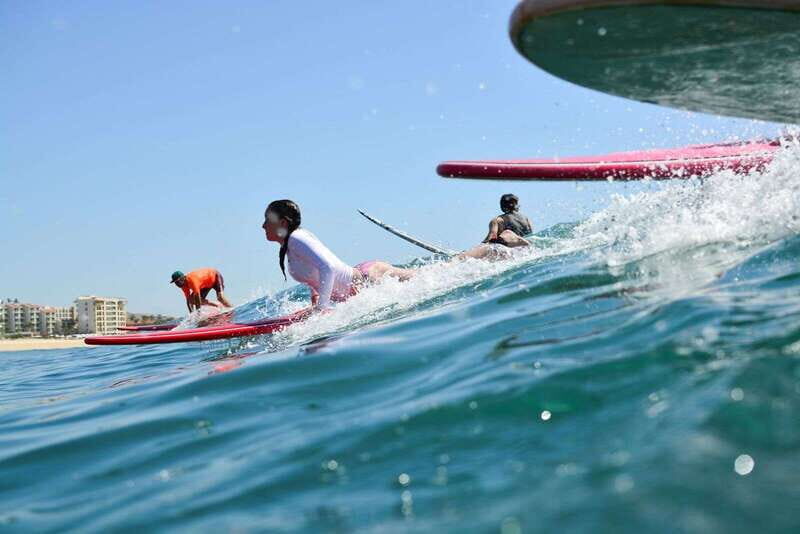
You’re paying $115 per person for a focused, beginner-friendly session that’s built around one goal: get you onto the board quickly, with real coaching. For a lot of first-timers, surf lessons fail for one of two reasons—too much time waiting around, or too little attention when it matters. Here, the structure is designed to keep you moving and coached, with instructors who teach you how to read what the water is doing and how to position your body to catch a wave.
The value also comes from what they include. You get round-trip transportation, a soft deck surfboard, and a rash guard or wetsuit, plus shaded camp and snacks. That matters because it removes the “what do we do with gear?” stress that usually hits first-day surfers. If you’re traveling with kids or a mixed-skill group, the logistics can make or break the day—and this lesson is set up to keep it simple.
Is it only for beginners? Not necessarily. Soft boards are also meant for intermediate surfers who want an easier ride while they work on technique. That’s a nice option if you surf sometimes, but you’re not ready for a harder board yet.
You can also read our reviews of more tours and experiences in Cabo San Lucas



The 3-hour flow: how the lesson keeps you from standing around
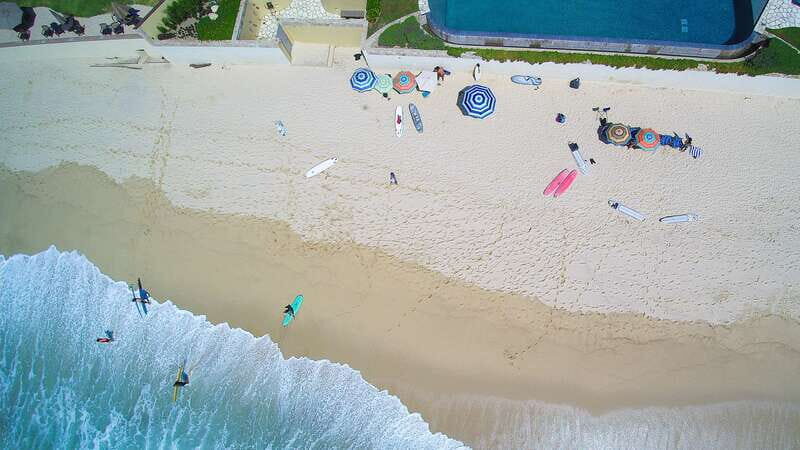
This is a half-day experience, built for momentum. The lesson runs for about 3 hours, and you choose a start time between 9 a.m. and 2 p.m. (availability depends on dates). The company recommends the 9 a.m. tour historically because afternoons can bring more wind.
While the exact minute-by-minute schedule isn’t listed, the experience is clearly organized around time in the water plus coaching on shore. You’ll start with setup and instruction, then you’ll head out with instructors who stay attentive as you practice.
Here’s what that usually means in a well-run beginner lesson:
- You get taught the basics before you’re out there catching random waves.
- You get corrected while you’re trying, not after you’ve already repeated the same mistake a dozen times.
- You keep cycling between attempts so you don’t lose confidence.
And based on what I’m seeing in instructor feedback, that final piece—the “don’t let you go until you can stand up”—is a big part of why people come back.
What you learn: from first pop-up to actually riding
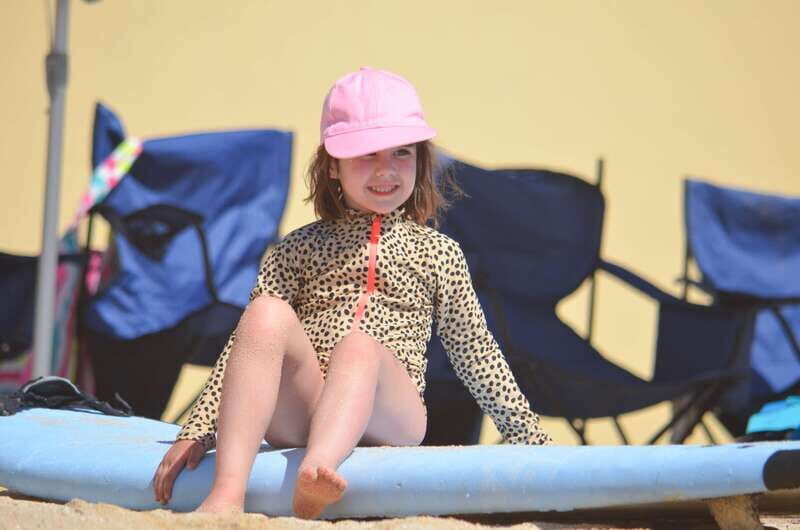
The biggest promise is not just learning to surf in theory. The lesson is designed to help you catch waves and stand up with guidance that stays hands-on.
The style described in instructor notes across multiple lessons is patient and physical about it. One example: instructors like Hugo and Alan are repeatedly praised for staying with the student throughout the session and helping riders get on their way. Another name that comes up is Mike, who’s described as patient and focused on giving direction that helped a first-timer stand.
You’ll also benefit from the soft board choice. Those beginner-friendly boards generally make it easier to balance and reduce the punishment when you fall. In surf, falling is part of the deal; the goal is to keep you learning instead of bracing for impact all day.
If conditions are rougher (more wind or higher waves), the instructors prioritize safety and adjust the plan. The company specifically notes that if conditions aren’t favorable—like wind, high waves, or a tropical storm—they offer to change your reservation day or provide a refund.
Soft board setup and safety: why the equipment matters more than you think

There’s a reason this lesson starts with equipment designed for learning. You’ll ride a soft deck surfboard and wear a rash guard or wetsuit. That combo does two things:
1) It helps you stay comfortable in Cabo’s warm-water setup while still having the right protection.
2) It lowers the risk of the “I can’t continue because I got hurt on the falls” problem.
If you prefer a fiberglass board for your surfing, you can request it in advance at booking. That’s helpful if you already know you’ll want the feel of a more traditional board. Still, for true first-timers, the soft board is the faster path to standing and building confidence.
Coaches and group size: the big difference between a good lesson and a forgettable one

A surf lesson can look the same from the outside, but coaching is where it lives or dies. This one is built around a tight guide-to-surf ratio: for every 3 people in a class, there will be 1 guide/coach.
That ratio matters because you’re learning body position, timing, and wave selection. Without a coach close by, you can end up practicing the wrong pop-up angle for an hour. With a higher attention level, instructors can correct you repeatedly until you feel the move click.
You’ll also see why people talk about instructors getting hands-on and not giving up on the group. Multiple sessions emphasize that the team keeps working with everyone until they can stand up—whether it’s a small child in the water or an adult who’s nervous on the first tries.






Watching the action: a real plan for kids and non-surfers
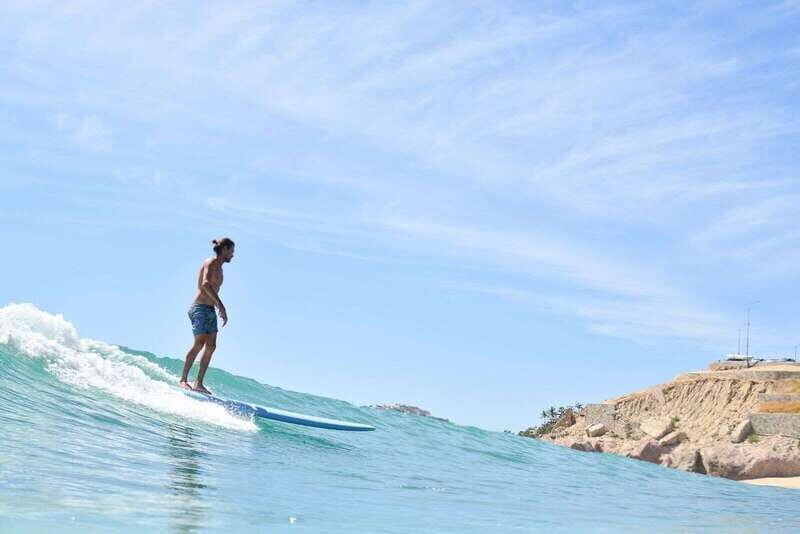
If you’re bringing family, this part is surprisingly important. Not everyone wants to go out into the water, especially kids. The lesson gives non-surfers an official way to join the experience without disrupting your spot.
To watch from the beach, you’ll need to book a non-surfer/companion spot on the same transport. That companion package includes:
- round-trip transportation
- a shaded camp with umbrellas and chairs
- bottled water and snacks
So while you’re practicing waves, your child or partner isn’t just standing in sun hoping things work out. This is also a nice setup for parents managing expectations: you can watch progress in real time and decide when your kid is ready to try.
Kids as young as 6 can start, which makes this one of the more doable family surf activities in the area—especially if your kid enjoys the water.
Pickup in Cabo: getting there without turning the trip into a chore
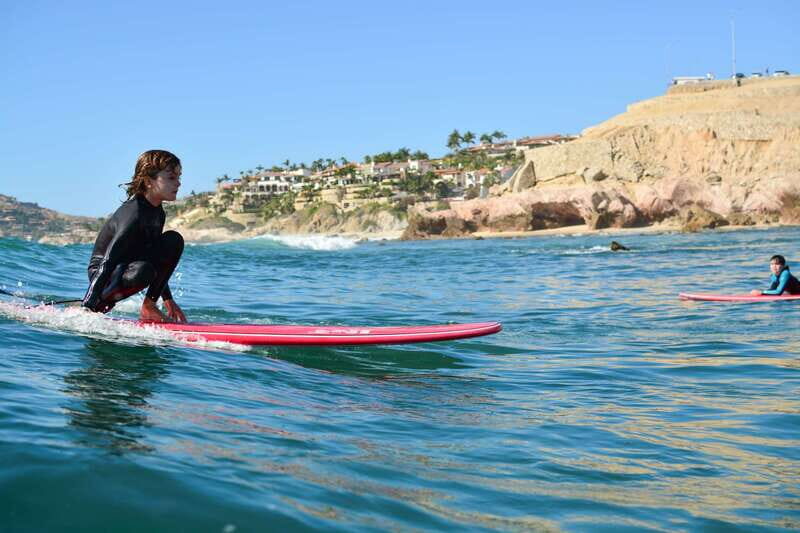
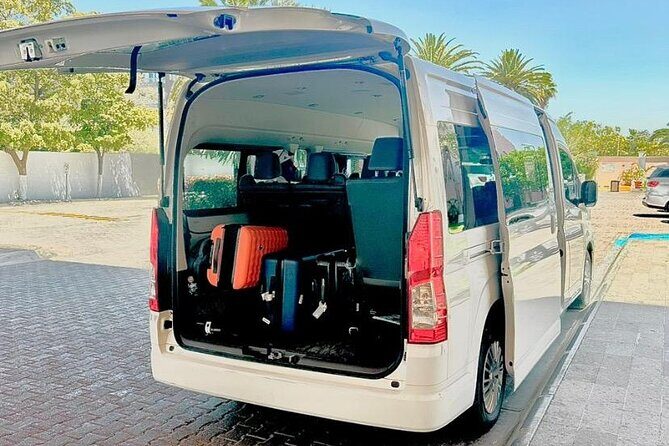
You’ll get round-trip transportation, including hotel pickup in:
- San José del Cabo
- Cabo San Lucas
- the corridor
That matters because Cabo traffic and parking can waste time you’d rather spend learning. The group van is part of why this feels like a clean half-day activity instead of a full project.
The team also sends communication ahead of time so you know where to be picked up and when. Punctual pickup is mentioned as a positive in feedback, along with the fact the vehicle is kept clean.
What to bring (and what not to stress about)
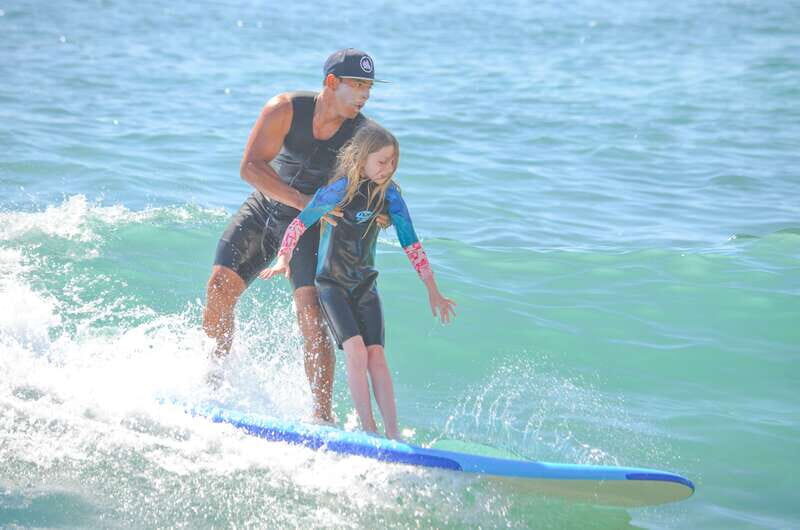
You’ll be mostly covered on equipment, but you still need personal items. Bring:
- swimsuit
- towel
- beach sandals
- sunscreen
- sunglasses
- sun hat
- sandals
- (and it’s also smart to have a towel ready for after)
What you’re not bringing:
- alcohol (not included)
- personal expenses (not included)
- anything related to surf board shopping
Not allowed: pets.
Also note a practical point: if you’re choosing the 2 p.m. slot, plan for more sun and potentially more wind. Even if you’re not in the water the whole time, you’ll be waiting in camp.
Photos in the moment: the kind of “proof” that actually helps

Several lessons include close-up help with getting set up and encourage students while they’re learning. One feedback item specifically mentions an assistant swimming nearby taking pics from close up, which is a neat touch if you want real memories instead of blurry phone shots.
You won’t want to assume every session includes photography for everyone, but the team’s role is clearly geared toward helping you succeed and capturing those first wins.
When weather changes your plans: safety first, with options
Surf depends on conditions. The company is upfront that when weather isn’t favorable—due to wind, high waves, or a tropical storm—your safety comes first. When that happens, you can either:
- change the day of your reservation, or
- request a refund
That’s the kind of flexibility that keeps a vacation from feeling fragile.
Who should book this surf lesson (and who should skip it)
This is a strong fit if:
- you’re a true beginner (or mostly beginner) and want a supportive setup
- you want a half-day activity that doesn’t eat your whole day
- you’re traveling with kids 6+
- you want bilingual instruction in English and Spanish
- you care about a guide helping you keep improving, not just getting in the water
You should skip this if:
- you have back problems
- you’re pregnant
- you have serious medical conditions
- you use a wheelchair
If you’re unsure, it’s smart to plan your expectations around the physical nature of getting on/off the board and practicing pop-ups. The lesson isn’t marketed as a low-movement activity.
FAQ
FAQ
How long is the half-day surf lesson?
It lasts about 3 hours. You’ll check availability for the exact start times.
What times can I choose for this experience?
You can choose between 9 a.m. and 2 p.m. Start-time availability depends on the date.
What’s included in the price?
The included items are round-trip transportation, a soft deck surfboard, a rash guard or wetsuit, bilingual instructors (English/Spanish), shaded camp, and refreshments & snacks.
Can non-surfers watch from the beach?
Yes. If you want someone to watch, they need a non-surfer/companion spot on the transport. The companion fee includes transportation, shaded camp, bottled water, and snacks.
What should I bring to the lesson?
Bring a swimsuit, towel, beach sandals, and sunscreen, plus sunglasses, a sun hat, and a towel.
What happens if the weather is unsafe?
If conditions are not favorable because of wind, high waves, or a tropical storm, you can either switch to another day of your reservation or get a refund.
Should you book this half-day surf lesson in Costa Azul?
If you want a surf day that feels structured, friendly, and realistic for first-timers, this one is an easy yes. The combination of soft boards, a strong coach-to-surfer ratio, and instructors who keep working with you until you stand up is exactly what most newcomers need.
Book it especially if you’re traveling with family and want the non-surfers to have a real plan. And choose the 9 a.m. slot if you’d rather avoid extra wind risk.
The main reason not to book is medical or mobility concerns listed for the activity. If that applies to you or someone in your group, look for a different type of experience.
If you’re healthy, curious, and ready to get your balance on a soft board, you’ll leave with stories you can actually retell.